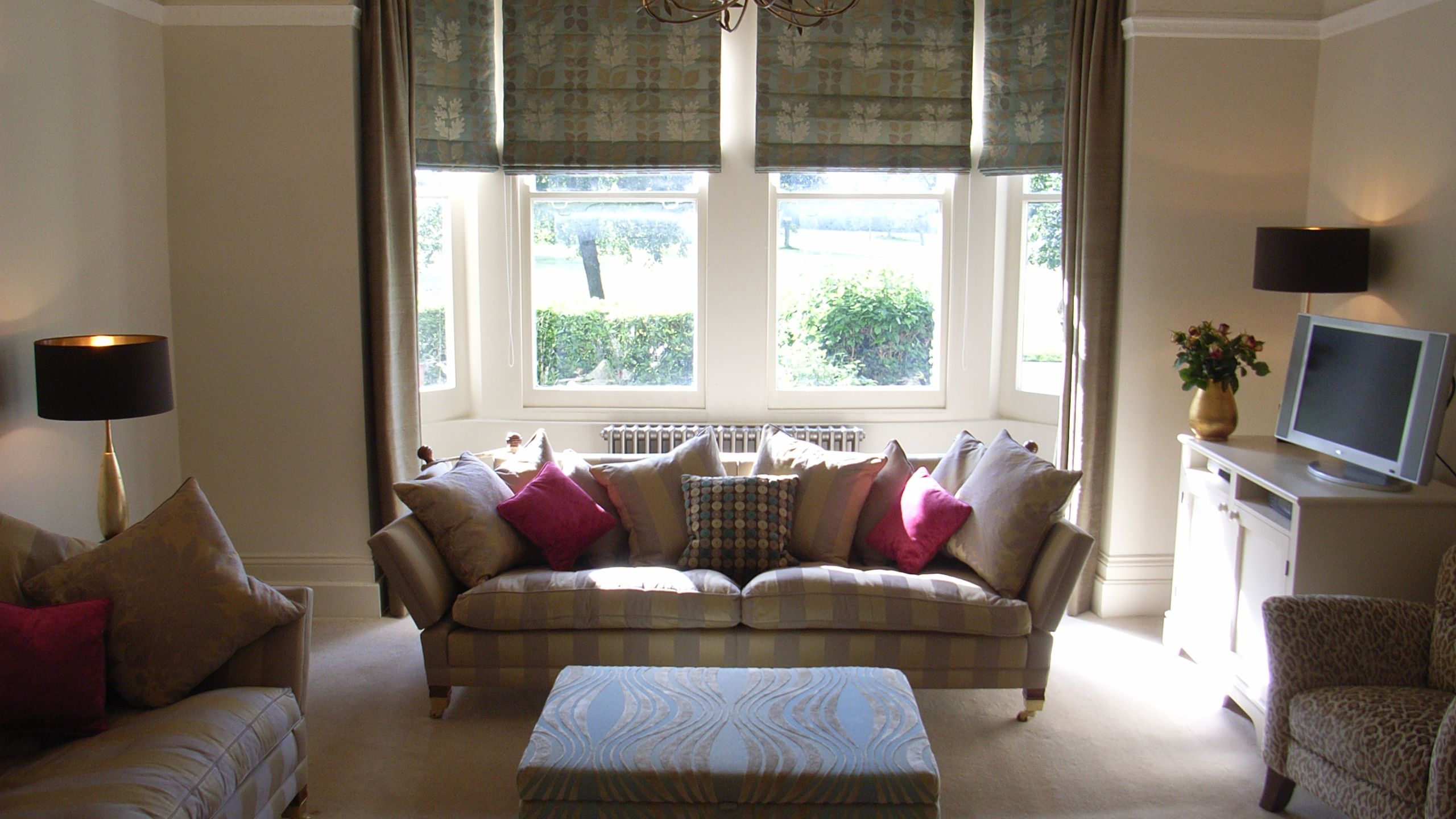
Roman blinds are a really modern and stylish way to dress a window, particularly if you are hoping to:
- Create a contemporary look for your room
- Introduce warmth without using curtains.
- Avoid covering a radiator beneath the window.
- Fit a quality fabric on a tight budget (a roman blind uses much less fabric than a curtain)

In this bedroom refurbishment, we chose a blind fabric significantly more expensive than the velvet curtains. Yet the relatively small quantity of blind fabric allowed us to create a very cost effective ensemble for our client.

Roman blinds
Here are some considerations to take before deciding whether roman blinds are appropriate for your design.
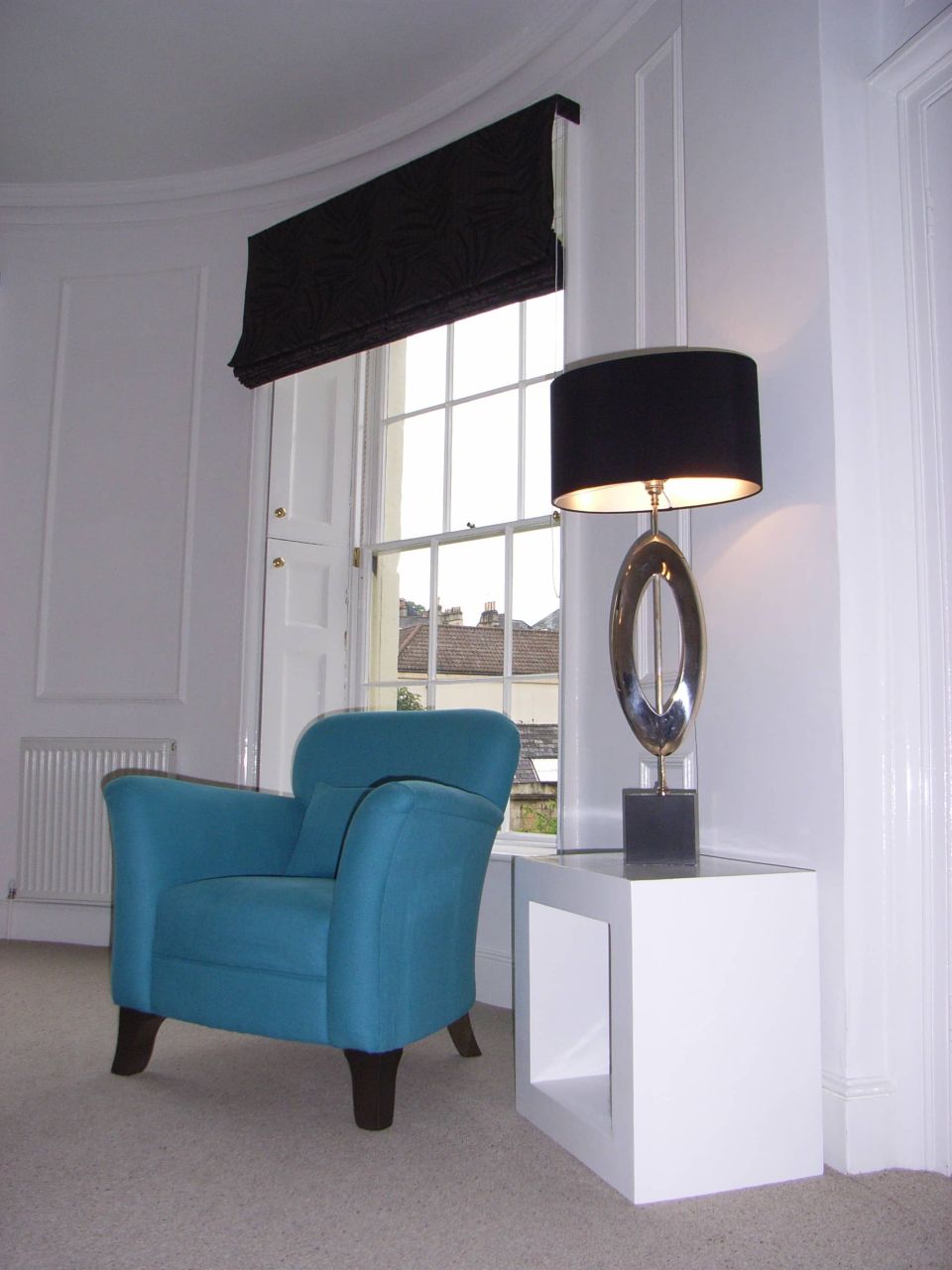
You need to check that they don’t cover too much of the window when pulled up. This is less of an issue with tall windows or high rooms because your eye level is not affected directly. However, for small or low windows, a roman blind may cover too much of the glass.
Roman blinds will cover 22cm-30cm or so in the open position. A waterfall design will cover more, since each fold is made progressively longer; when the blind is up, each fold is visible, one below the other. We helped a client to visualise this recently by holding an opaque board across the window at the equivalent height of the pulled up blind. She could then see that there was plenty of glass left to see through.
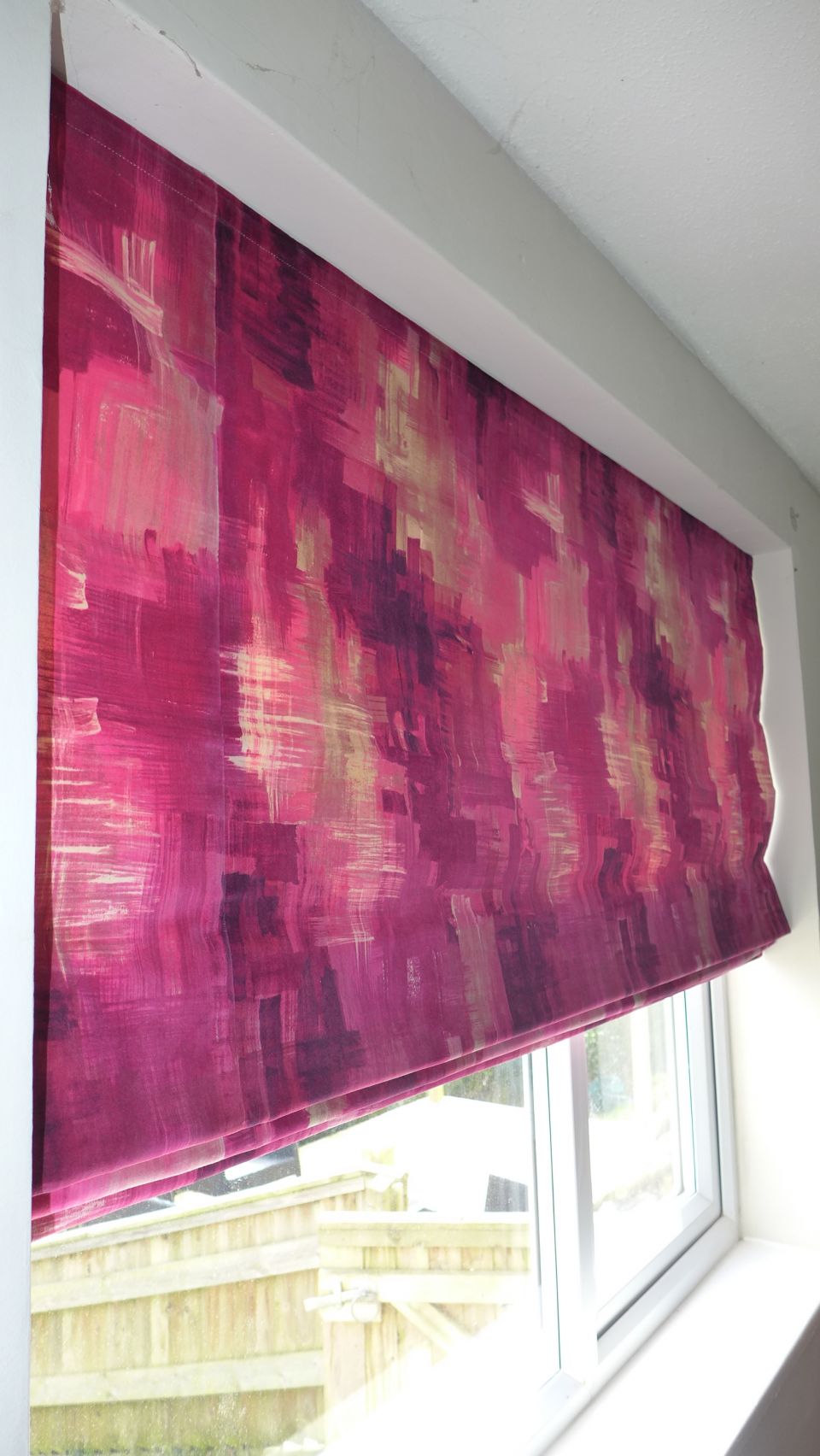
You’ll find an on-line calculator to show how far down the blind will hang (search for roman blind calculator); you enter the number and depth of pleats and other factors and the calculator works out what you need to know.

There is no rule that says all the blinds should be the same. Below we introduced a contrasting, central blind in blue faux suede picking out the accent colour in the room.

Window recess
You’ll need to decide whether to fit the blind inside or outside the window recess. Roman blinds should fit snugly in a recess to minimise light spill around the edges. Outside the recess, there will be a gap of about 25mm or more to account for the thickness of the headrail; so there will be some light spill. Having said that, you also see light spill from the sides and beneath curtains, so that may not be important to you.

Pleats and bay windows
You should also consider how the pleats bunch together when pulled up. This may become an issue in the corner of a bay window where adjacent blinds interfere with each other. The larger the folds, and the thinner the lined fabric, the flatter they will hang. In the first image below, we managed to keep the pleats apart even for this very long blind with many pleats, by using a fine fabric. In the second image we opted for a deeper blind to show off more of the fabric and also to give it a more relaxed look.


Calculating Roman blind fabric
When calculating fabric quantities, double check the width of usable fabric. Your sample might state a width of 140cm, but we have come across fabrics where the usable width was only 118cm (with a lot of blank fabric in the selvedge). It would be helpful if suppliers could make this clear, but many don’t. This can be critical when you are on the limit of deciding whether to order one or two widths; so always check.
The minimum depth of each pleat would be roughly 20cm. Remember to allow 20cm on the length for turnings and 8-10cm on the width for seaming. If you need to order more than one width, don’t forget to take into account any pattern repeat (stated on your fabric sample). This is true not only for a single wide blind, but also across a range of blinds in a bay to ensure they all line up. A half drop pattern repeat adds an additional level of complexity which you need to address; essentially you calculate as you would for a normal pattern repeat but add an extra pattern repeat to the last odd drop. The Sew Helpful website gives a good account of how to prepare the drops.

Additional fabric
If you have much fabric left over, make cushions from the offcuts – they are relatively (40cm or 50cm square cushions are best), self piped if there is enough fabric.
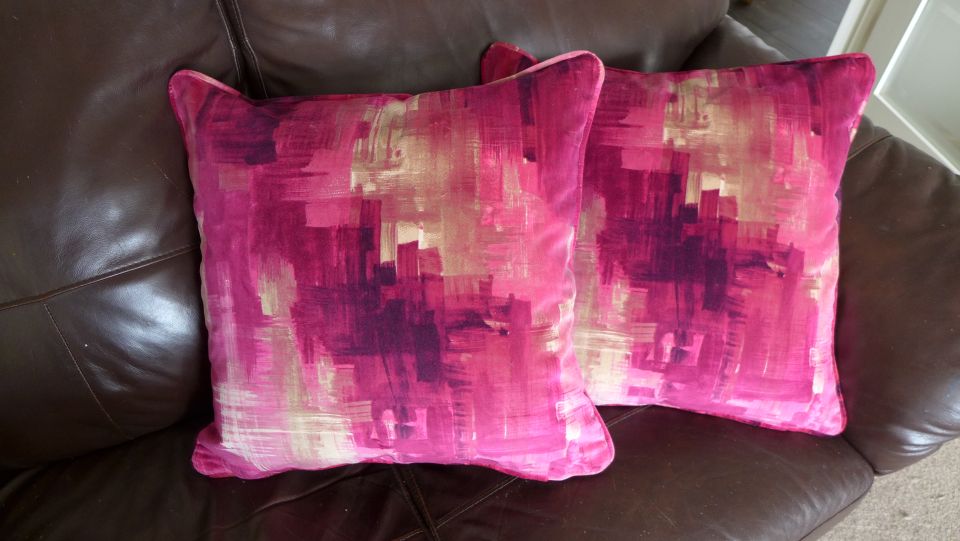
Equally, if your fabric is slightly too narrow for the window and you don’t want to buy an extra drop, you might consider edging the blind with a complimentary or contrasting, cheaper plain fabric. In the image below, you can see that we used extra fabric from the curtains to widen the blind, saving several £100s.

Roman blinds and dress curtains
A Roman blind on its own can look a bit spartan, so we give a fuller appearance by dressing with curtains. These can be full curtains or just dress curtains to to save on the fabric cost.

Roman blind headrail and chain
Finally, you should decide which side to fit the operating mechanism. Which side is easier to reach? Always be careful when securing the cord or chain when small children are around; make sure the P-clip is used for chains and keep cords well out of the way. You should look to remove all cords from the home; chains have a weak link for extra safety.
Roman blinds are a great way to dress a window in contemporary style. They are a cost-effective means of dressing a window with a warm, high value fabric, that doesn’t cover the radiator. If you want to compare Roman blinds with alternatives please read our page on window dressings.

