Our projects usually require some form of new heating whether a real fire, gas fire, radiators, towel warmer, or underfloor heating.
Modern and contemporary fires
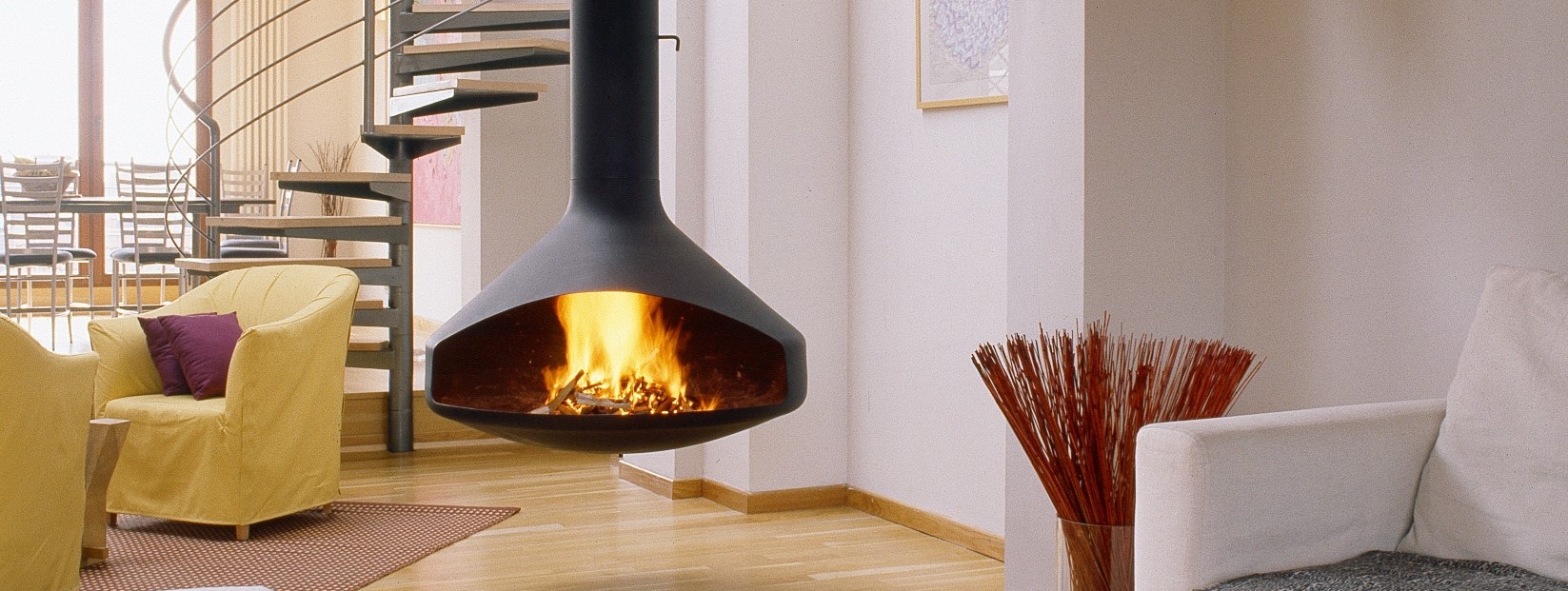
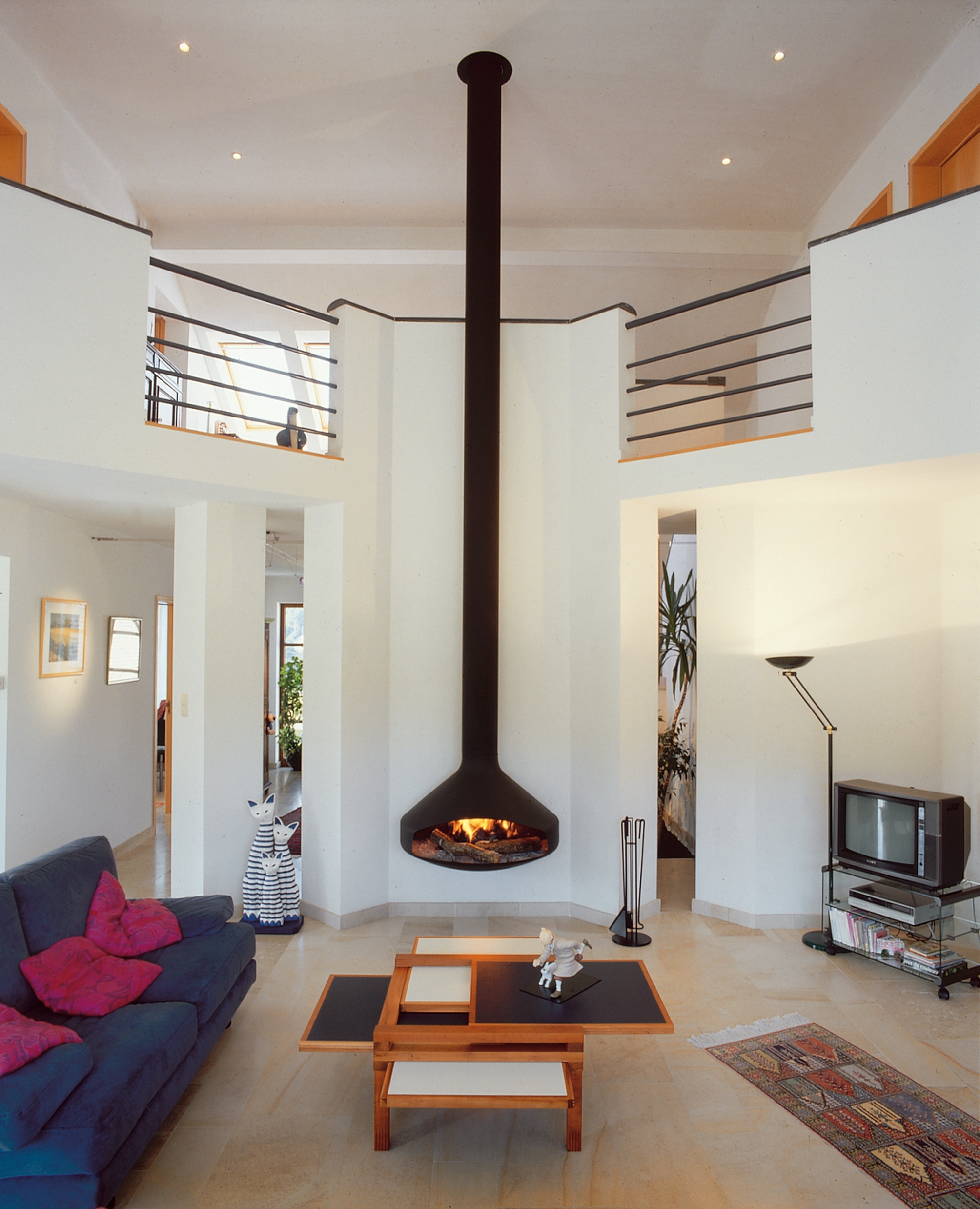
Our most exciting fireplace project was to install a wall-mounted architectural gas fire, with exquisite styling. Our clients initially wanted to fit it “round the corner” just for a bit of warmth but we persuaded them that this was a feature to be admired.
Our photos didn’t do the fire justice, so here is the same model on a similar installation but on a grander scale from our supplier.

Towel warmers
We supply and fit towel warmers for all our bathrooms. You may like the idea of a dual fuel towel warmer which ordinarily runs off the central heating, but has an electric element to take off the chill in summer.

Floor mounted towel warmers tend to be cheaper to install because they avoid chasing pipes into the walls. However, when budget permits and a full renovation is underway, we prefer the neater look of a wall mounted towel warmer.
Radiators
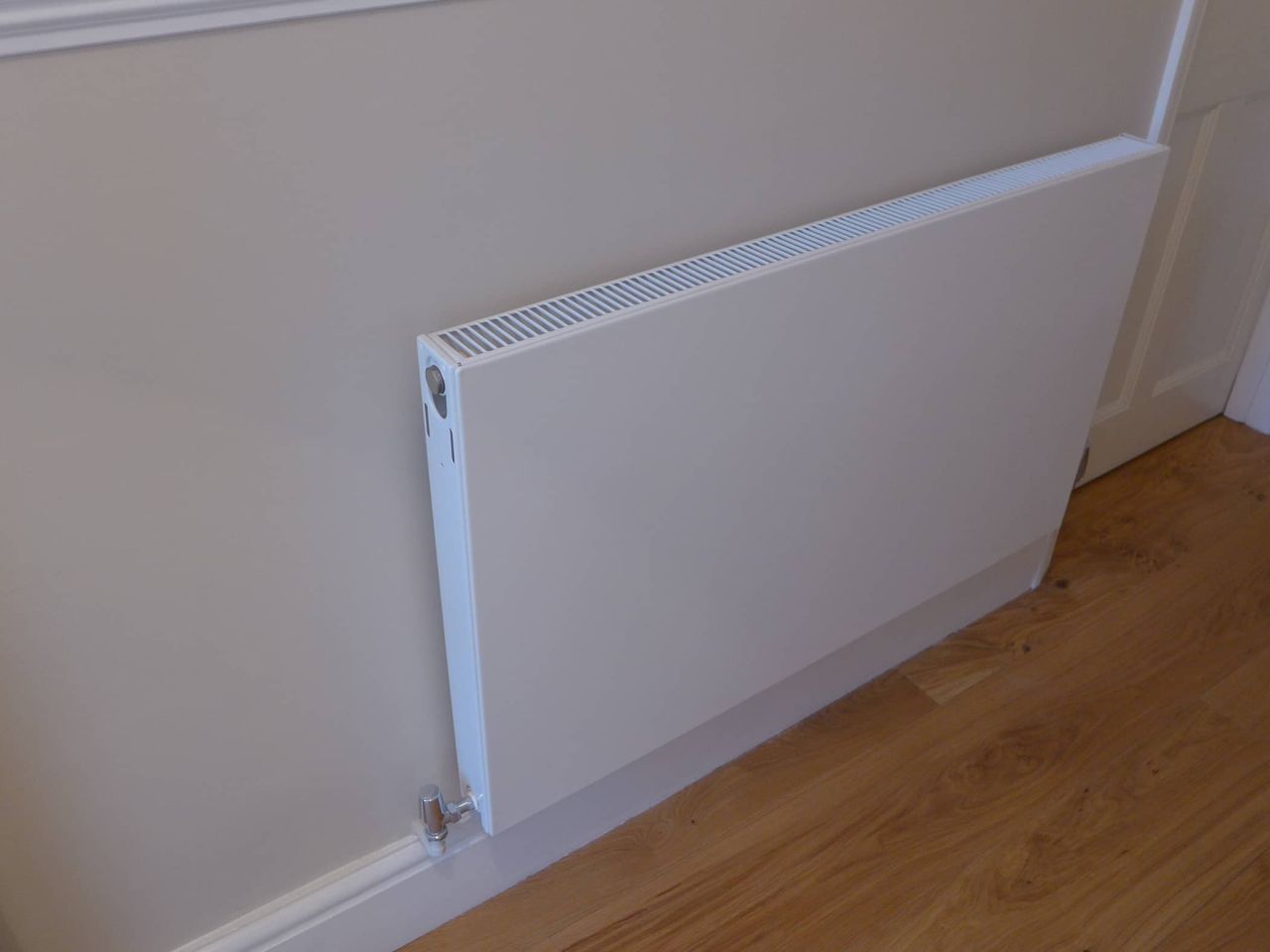
We supply and fit radiators, of course, but avoid crinkly white products. In fact trade radiators today are much more acceptable with their flat panel exterior. We often paint them to match the wall colour, and they disappear!
We install radiators beneath windows for efficient heating. If you are concerned about your window dressing covering the radiator, consider a blind. You can read more in our advice on window dressings.
An on-line heating calculator is useful for working out sizes to suit the room. Most on-line suppliers, like Trade Radiators, have one on their website; we suggest using several and selecting the largest output recommended.

When it comes to more interesting radiators, we prefer taller models as they free up much needed wall space for furniture and other uses:
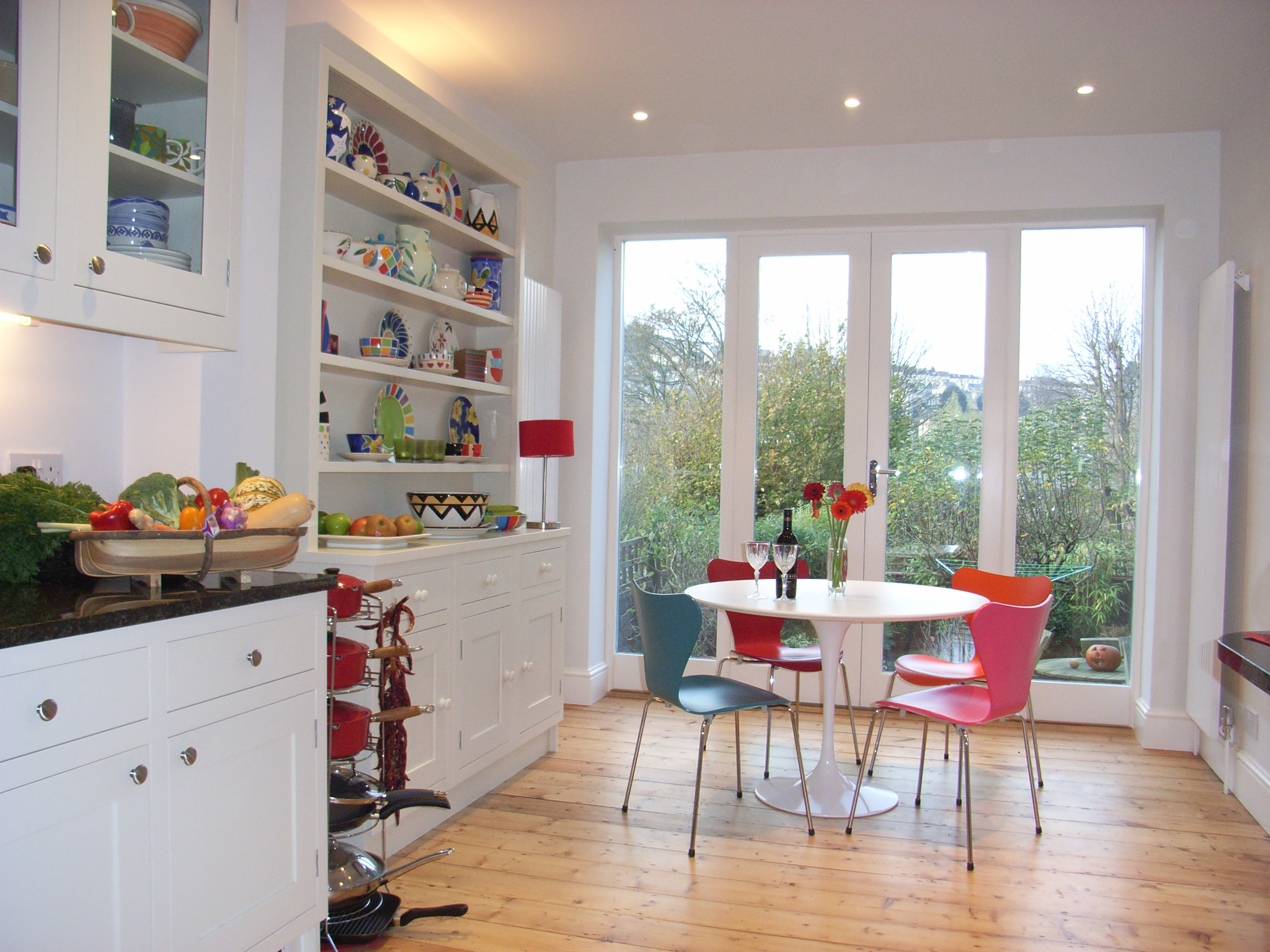
Taller radiators are also useful if space is limited, as here with two tall radiators flanking the French doors; ideally placed for warmth around the dining table.

Feature radiators
Occasionally we will fit a feature radiator as with this coil model. We designed the illuminated enclosure for it to look spectacular at night.
Electric underfloor heating
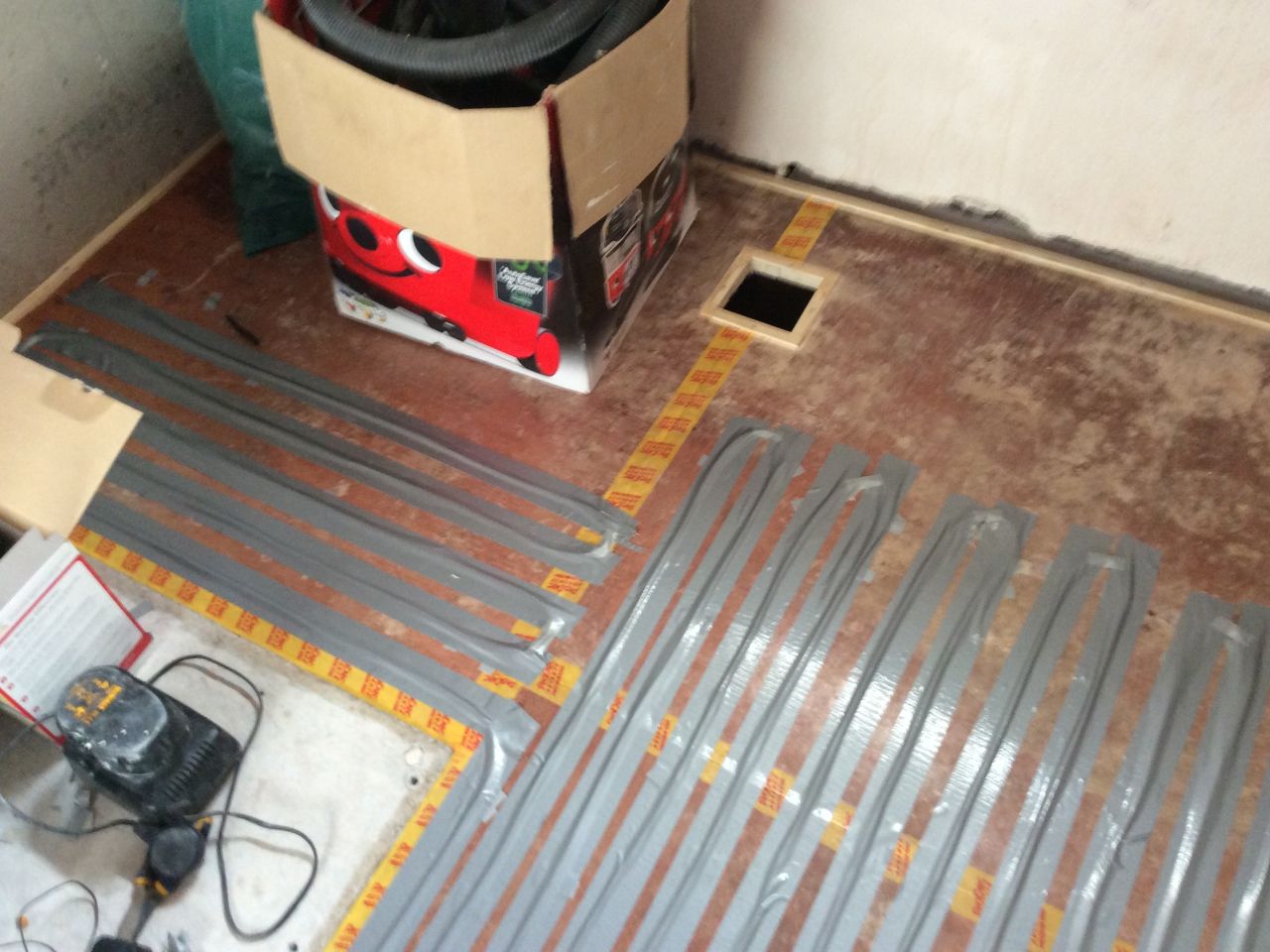
Electric underfloor heating is more expensive to run than a wet system, but might be the best option for a small area such as a bathroom. Electric systems come in two main formats: a mat or, as here, a loose wire installation.
Loose wire electric underfloor heating gives you more flexibility to avoid fixtures such as a bath. The wired layout above turned into this wet room below.

Wet underfloor heating
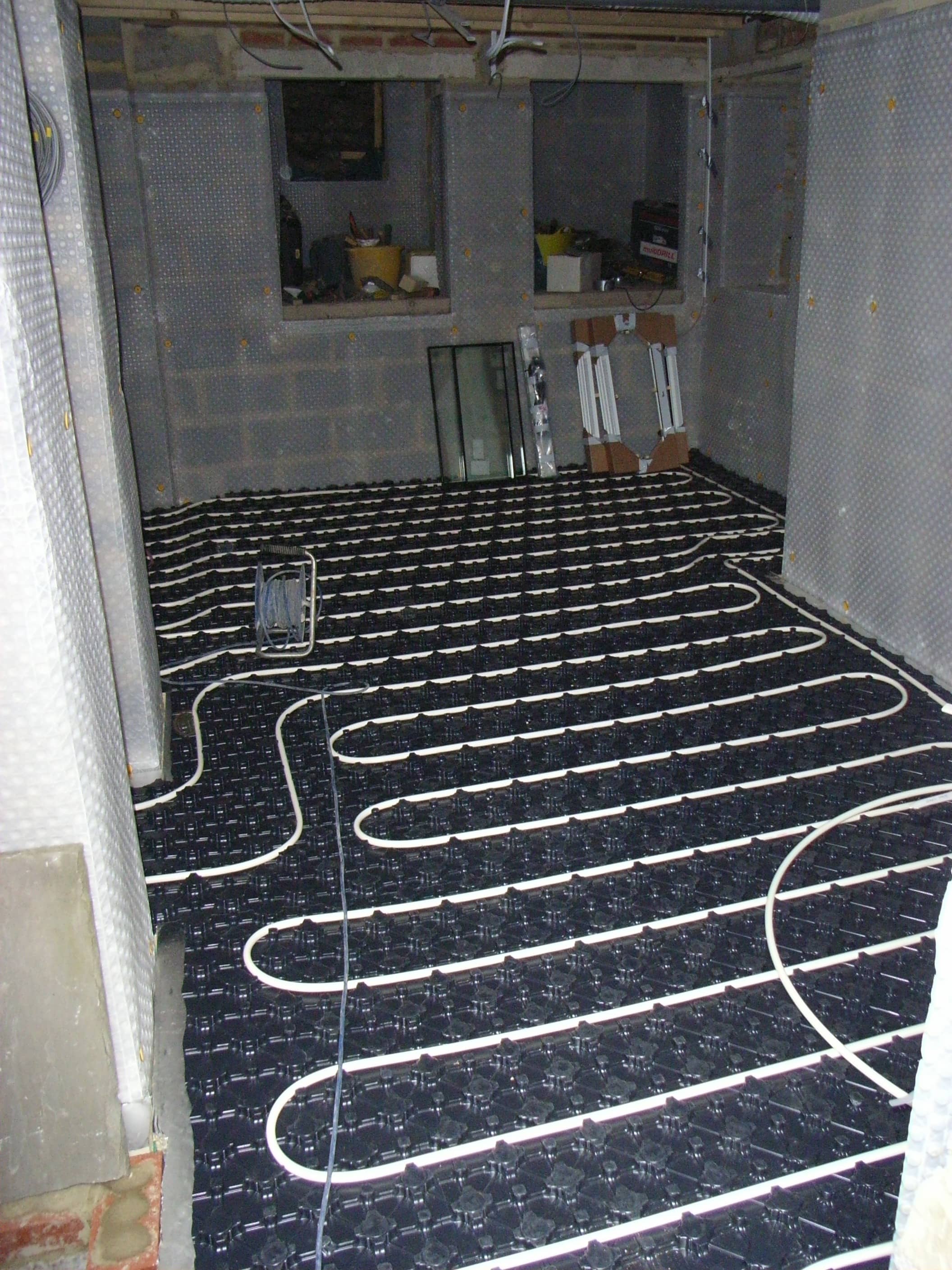
A wet underfloor heating system runs off your boiler. A manifold controls flow to the underfloor pipes in different zones. If you are undergoing a major renovation and the space is large enough, this could be a good option, It is cheaper to run than an electric system and frees up wallspace for other uses.
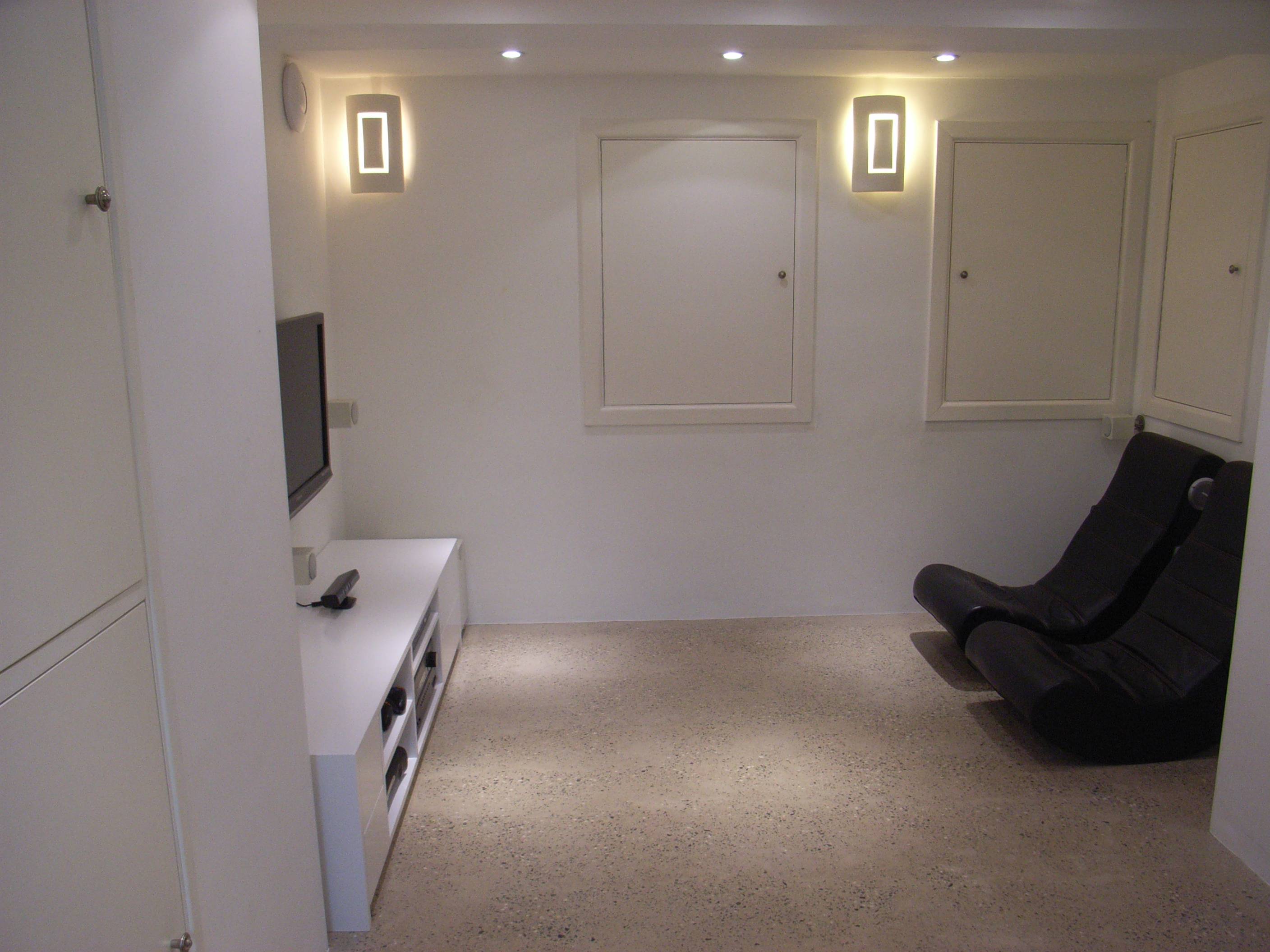
Here is the basement after the screed and concrete floor were laid.
Fireplace
If you don’t need more heat but enjoy the look of a fireplace, we have installed several to provide a stylish focal point. In period property, it is satisfying to restore some of the fantastic features that have been ripped out over the years. We found the fireplace below in a reclamation yard, sprayed and installed it with a new marble hearth.

Gas Fire
If you want a real gas fire, the world’s your oyster. Below we installed a new gas fire with limestone surround, having first installed a flue liner.
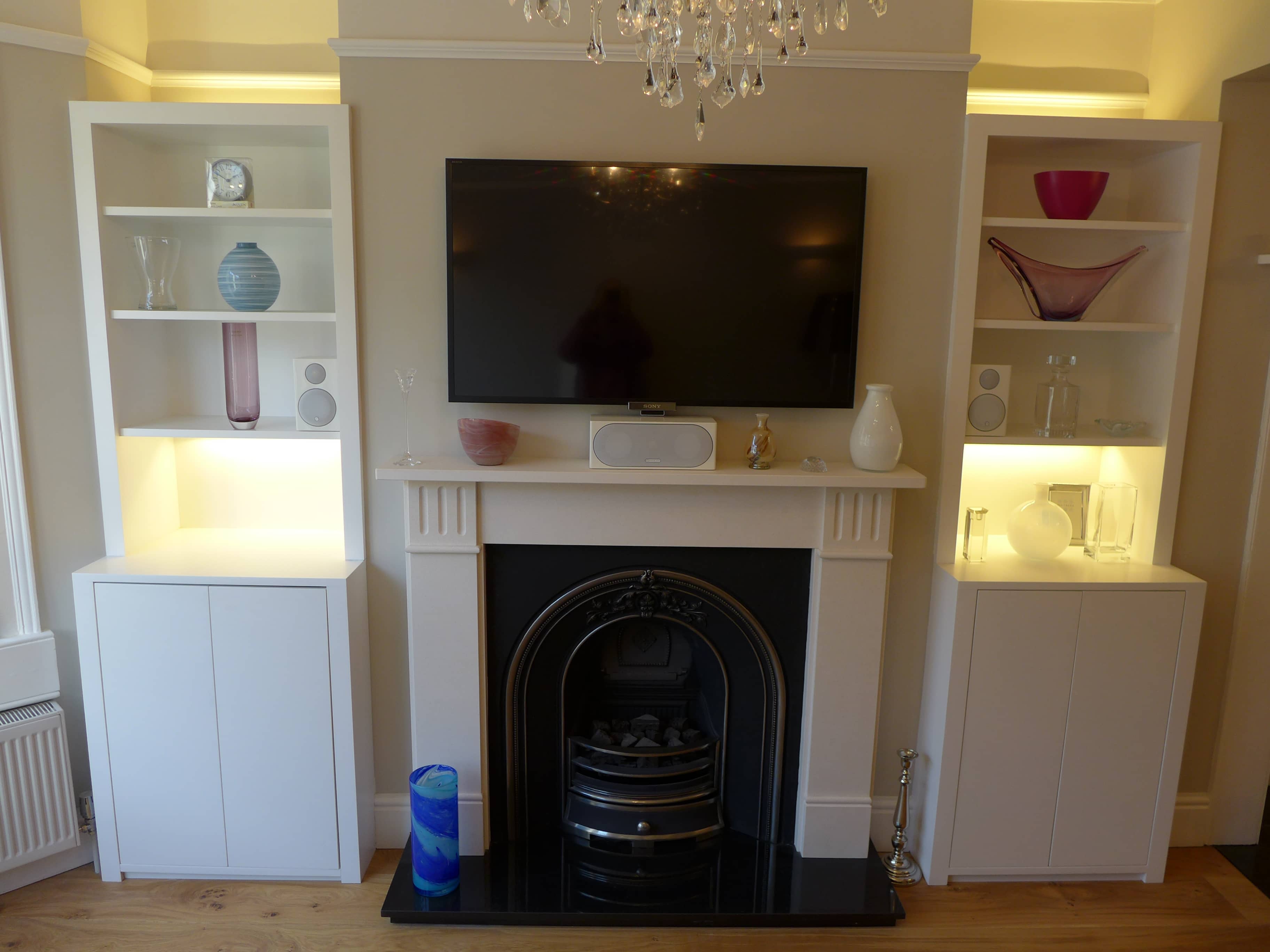
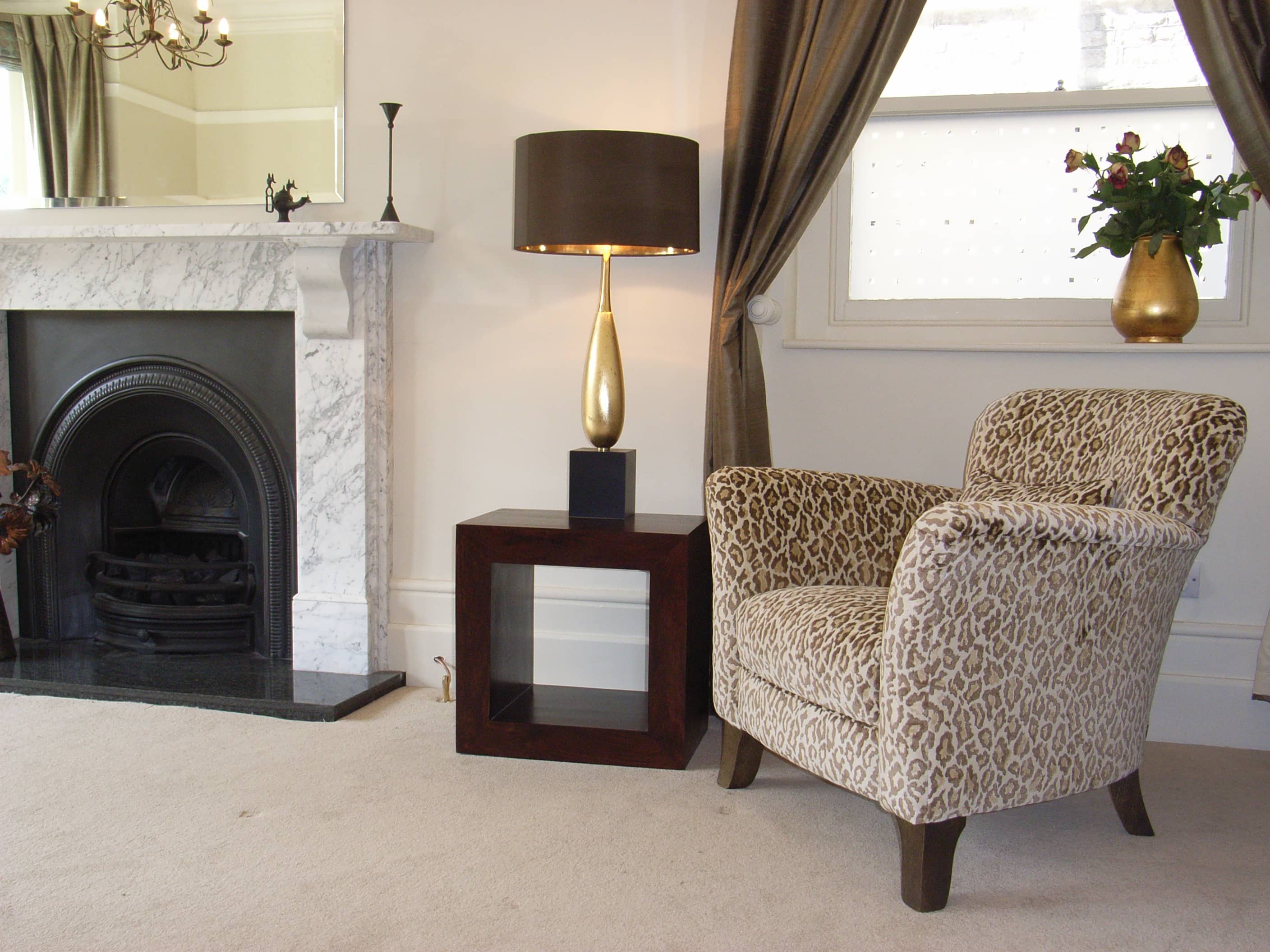
Here is one we installed with a marble surround as part of a sitting room design:

Electric fire
Some buildings don’t have a gas supply. Here in this 70s block, our client had several, ugly storage heaters. So when we refurbished her living room, we took the opportunity to install this contemporary electric fire. It has a realistic flame effect around a set of pebbles and looks really great.

Plinth heater
A solution for warming a small kitchen is to install a plinth heater. This fits neatly in the plinth and blows air across a heating element. You can see one here below the sink unit.
Here, we’ve looked at a selection of heating choices. As part of the overall room design, don’t forget to check size and position – not only for the room to receive sufficient heat, but also to ensure that furniture can fit comfortably in the same space.
