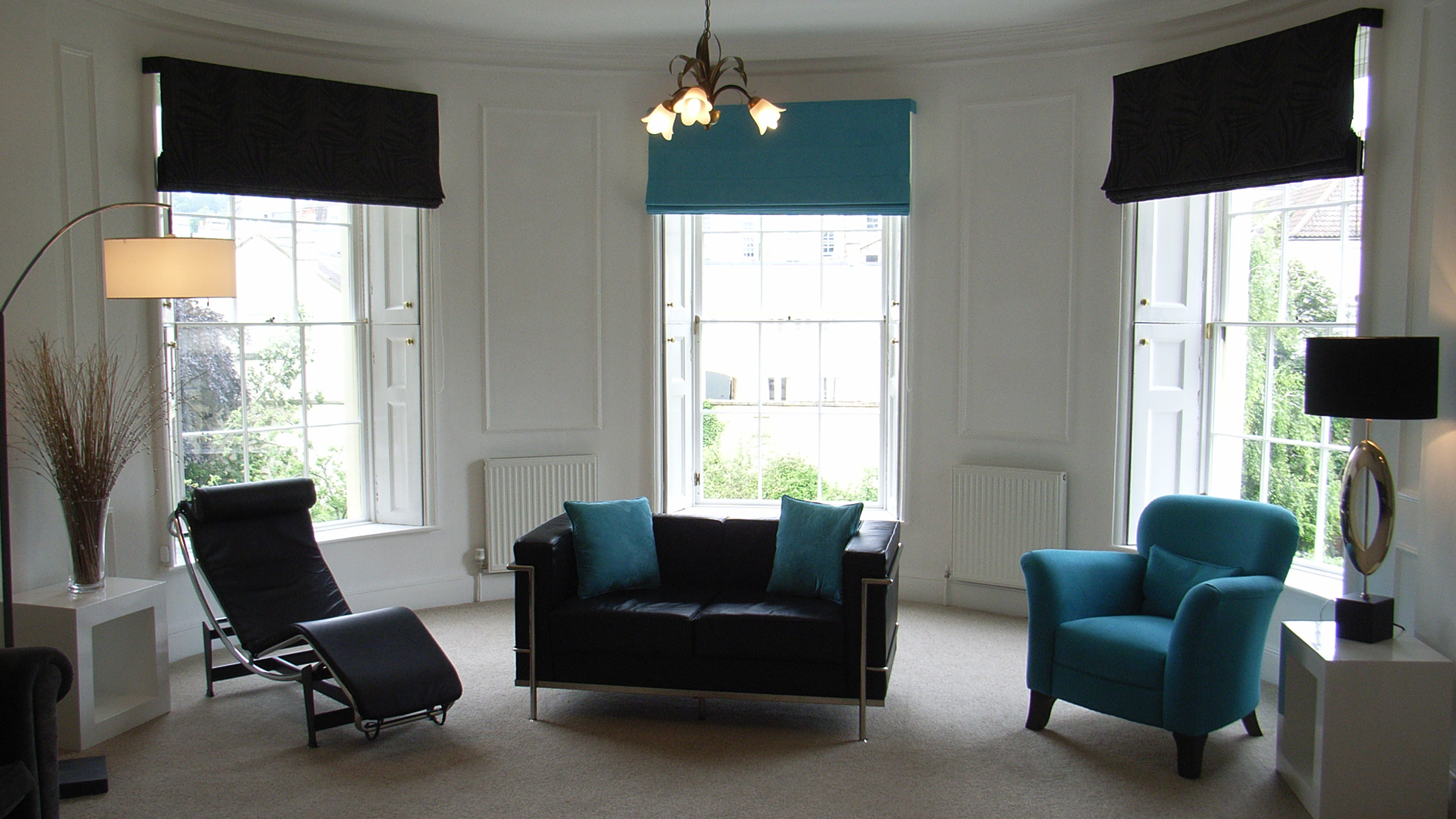
Stylish window dressing is an integral part of our interior design service. Whether curtains, blinds, or shutters, here is some advice on choosing a window dressing, with a selection of examples from our projects.


Roman blinds
If you want to fit a quality, expensive fabric but are concerned about your budget, we would suggest a roman blind. Roman blinds use less fabric than curtains and so you can select a more expensive product but use much less of it. Lining helps a roman blind to hang better and create a warmer feel.
There’s more information on our roman blinds page.
Dress curtains
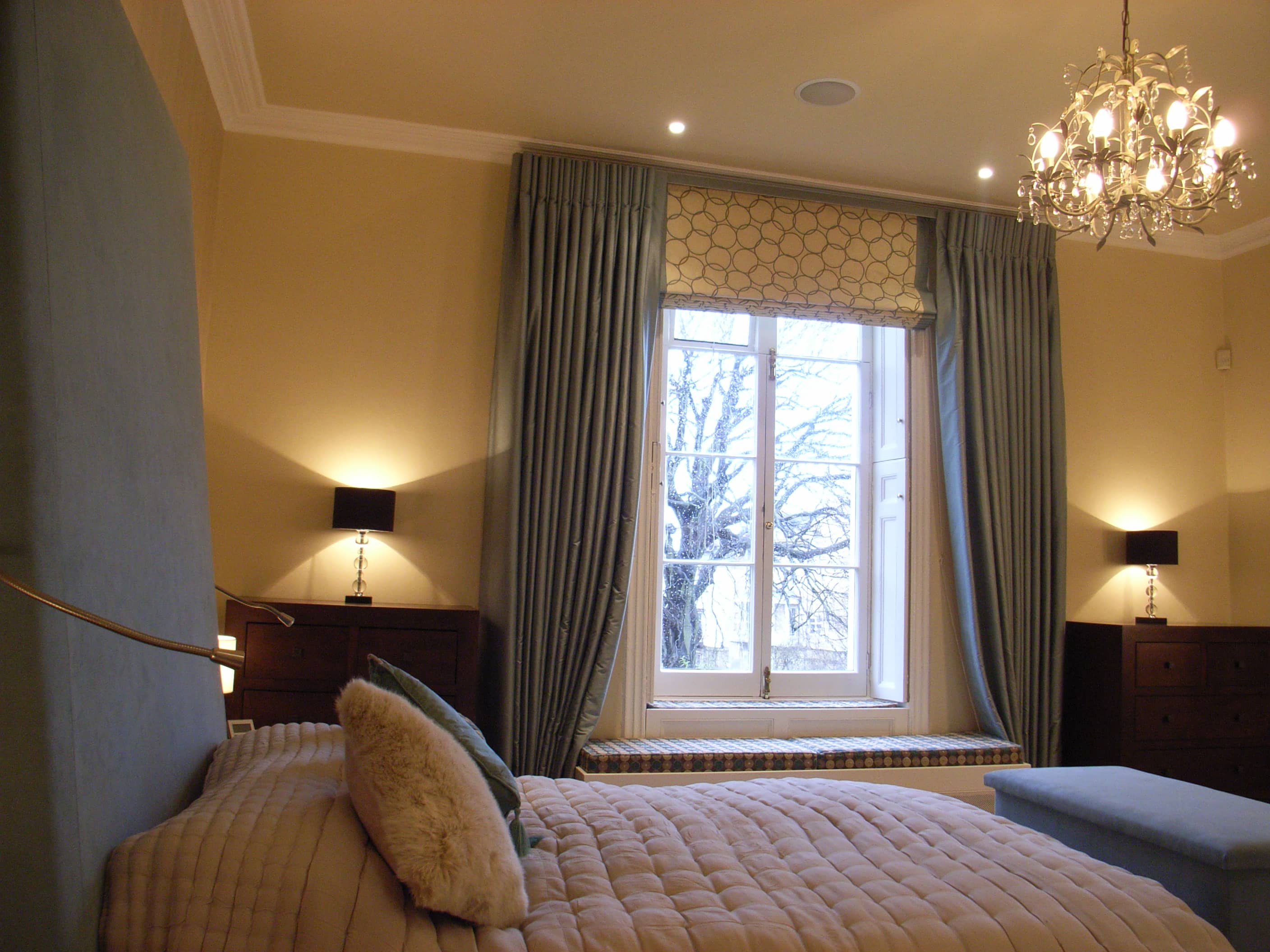
If a roman blind feels a bit spartan on its own, we would team it with dress curtains. Dress curtains stay open, so you save on fabric whilst creating a more complete look. You also avoid covering a radiator or window seat, so is both stylish and practical. Note the goblet heading – we return to this later.
Curtains
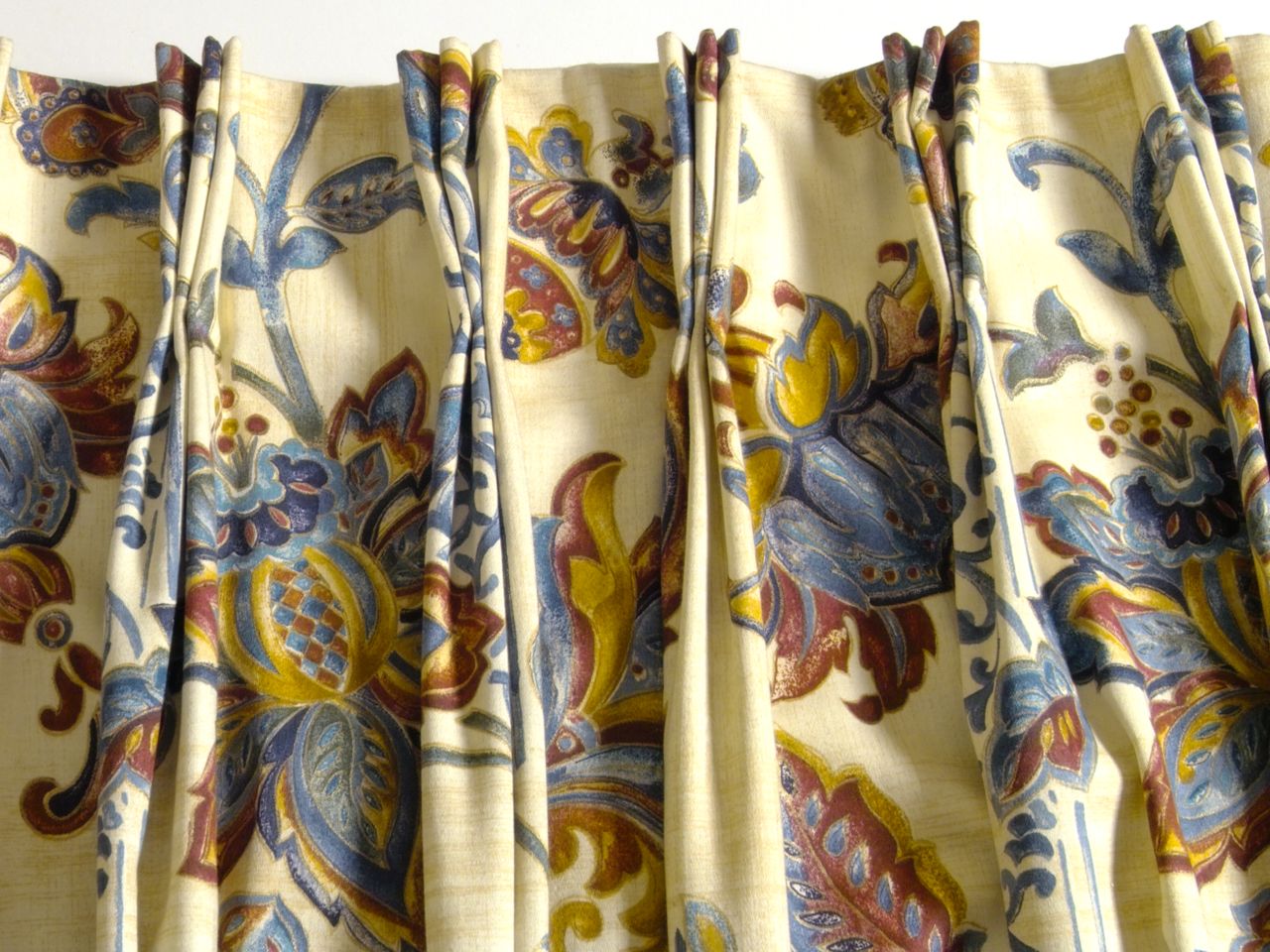
Most people will pull their curtains at night, but be wary of choosing a plain dark fabric. You will end up with large rectangular block of colour, which can look quite oppressive. A plain fabric works fine in a colour similar to the walls, but consider a patterned or textured fabric to break it up.
Curtain headings
You’ll be asked for the type of heading you prefer. Goblet and pinch pleat headings look great, particularly on plain fabrics. But you need to be careful with a patterned fabric – you might fall in love with a flat fabric sample, but with a tight pleat, you lose some of the effect because the gathers naturally disrupt the pattern. We are not averse to choosing a pencil pleat; although some designers look down on this type of heading, it creates fewer strong gathers and so you see more of the pattern as designed. You can also save money with a pencil pleat because it is cheaper to produce and it is easier to use less fabric. Typically, one specifies curtain fabric quantities to fit 2.5 times the width of the window; in a recent project where we wanted to see more of the large pattern, we reduced this to 1.7 with a pencil pleat and it looks great.
We calculate quantities for our clients but you may find this site helpful.

Hold backs, tassels and hooks
Don’t forget hold-backs, tie-backs, tassels and hooks to suit your window dressings. Check that the “embrace” is large enough; in other words, that the length of rope, fabric tie, or hold back is sufficient to allow the fabric to hang naturally.

Curtain poles
Curtain poles come in many designs these days. Bendy poles suit a bay window, with C-shaped rings, to sweep the curtains around corners and over the supporting brackets.
We like classic poles with a contemporary appearance. Here is one example with a minaret finial, but painted in a contemporary finish.
Remember when measuring for curtains, the pole should be in position. You then measure from the bottom of the curtain ring in a number of places to check the drop, depending on how you want it to meet the floor. The top of the curtain will just cover the bottom of the ring so you can see the pole as in this image.
Bay window poles


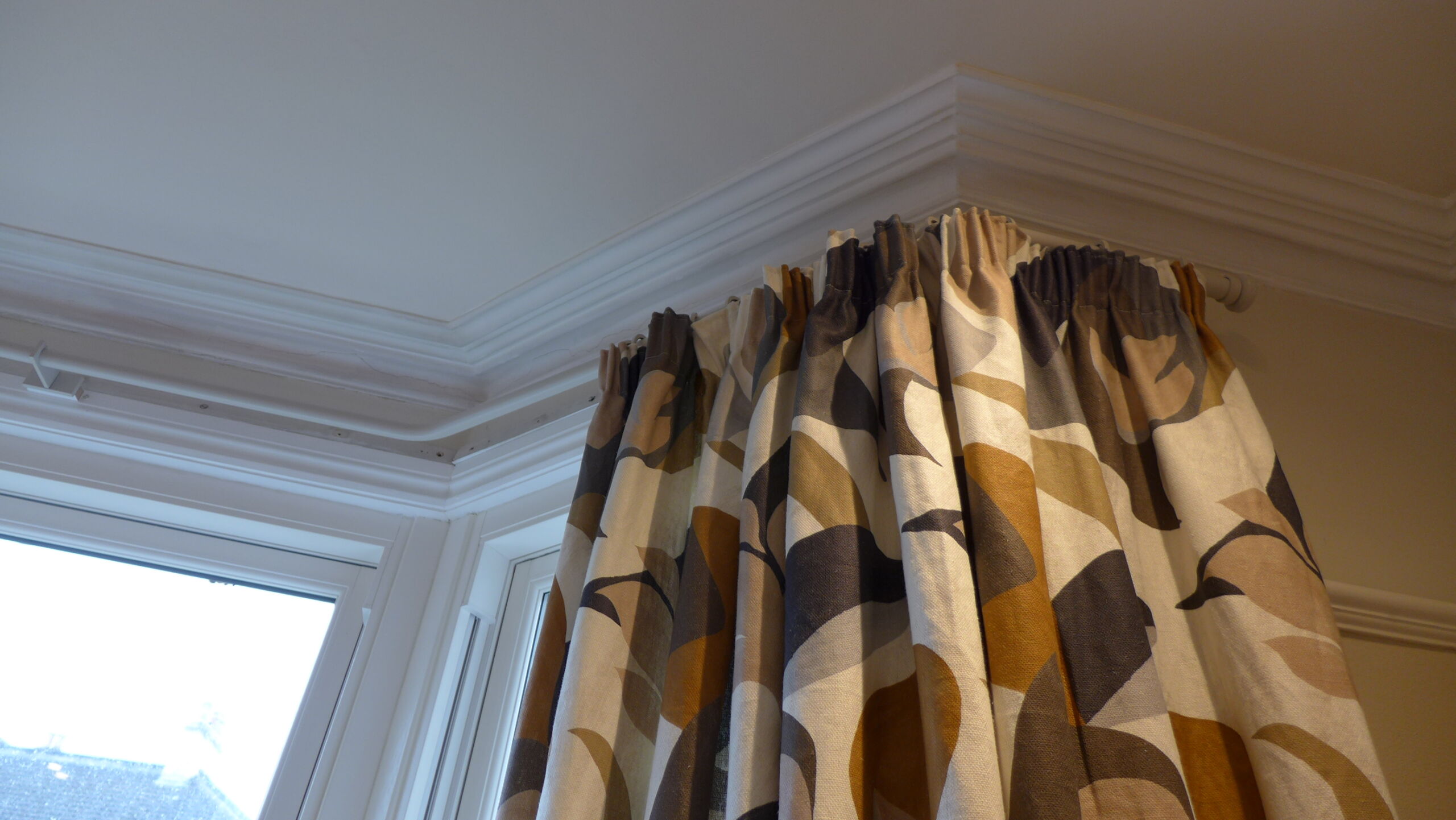
As mentioned above, bay window poles can be pre-formed to suit the angle of the bay. Here we see two options. The first is a traditional splayed bay with a pole formed with two bends. The disadvantage of this design is that it can leave much of the curtain covering the left and right windows. But this may be necessary because of fixtures on the adjacent walls. The second photo shows a pole with four bends, bringing the curtain further round the corner and clearing the windows completely.
One final point when choosing curtain poles – make sure they are the right scale for the curtain and the room. Cheaper, 19mm diameter poles, particularly bay poles look too “weedy” for a fulsome curtain in a Victorian setting. 25mm looks more to scale.

Pleated Blinds
Pleated blinds are no longer the nasty, cheap products you probably associate with conservatories. Modern pleated blinds take up very little space when drawn up, so you can see through more of the window. New designs have a ratchet smartcord which does away with long, unsightly strings dangling in the way. Battery operated blinds are also in vogue and increasingly affordable.
Day and night blinds
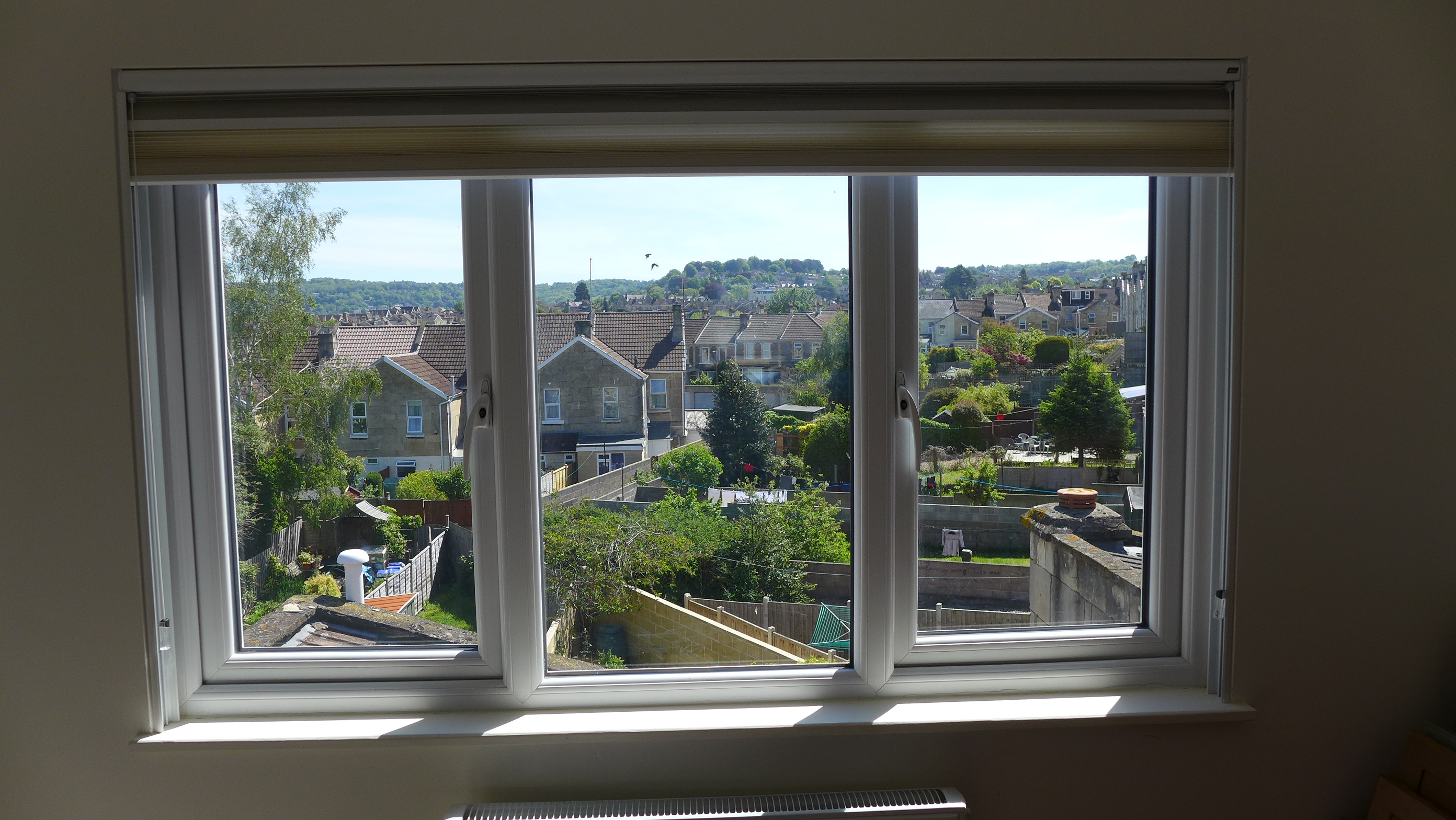
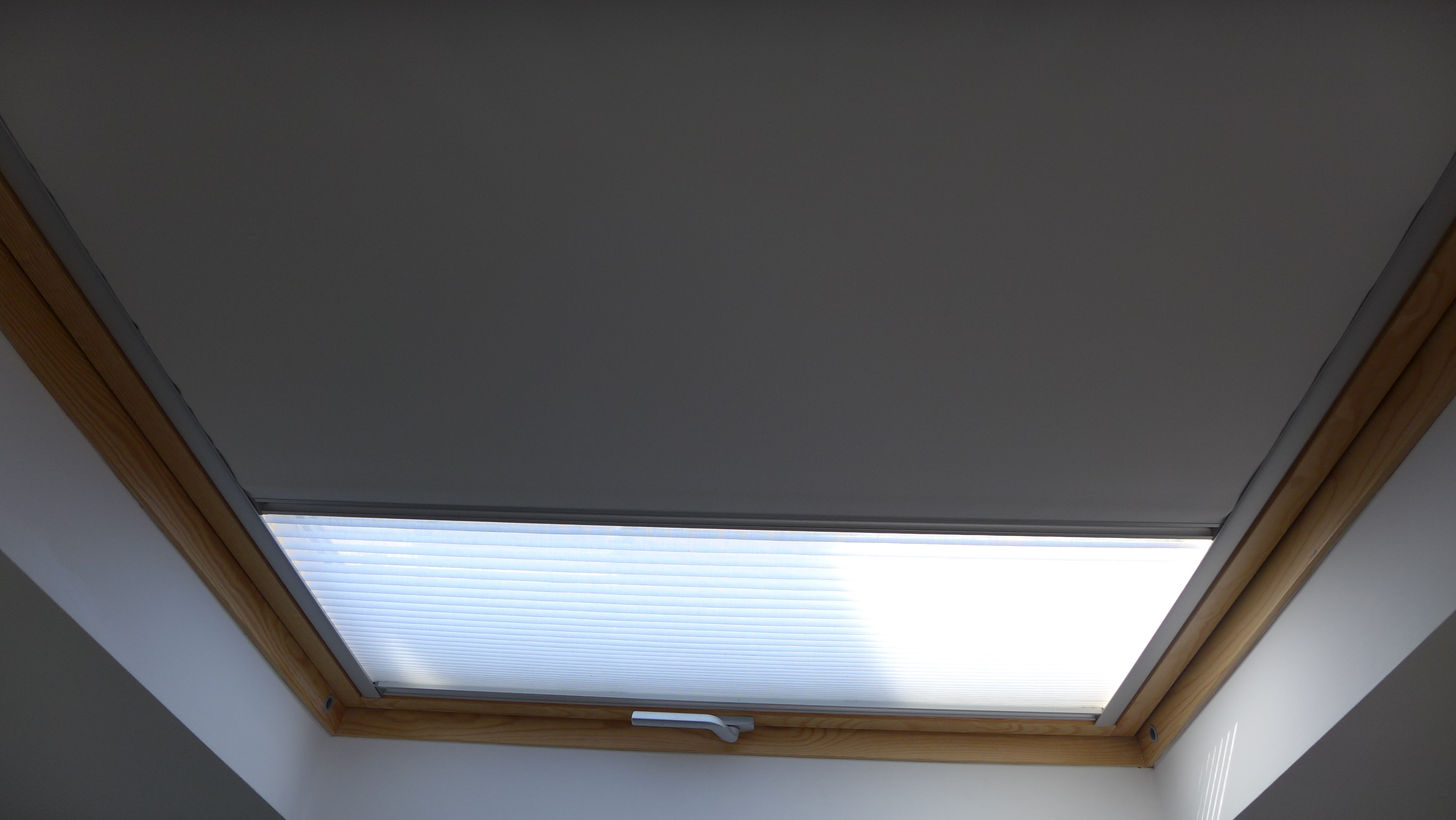
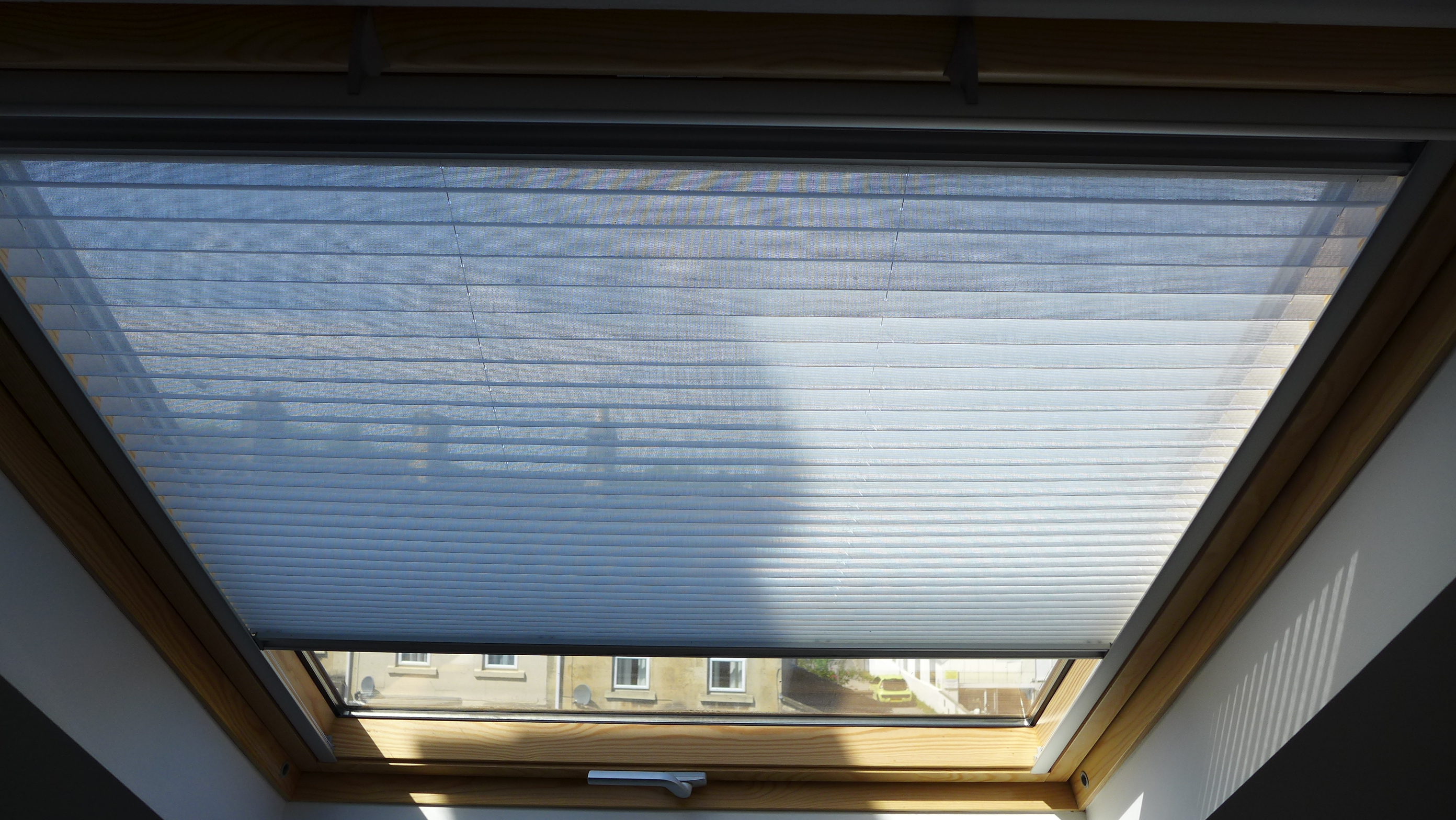
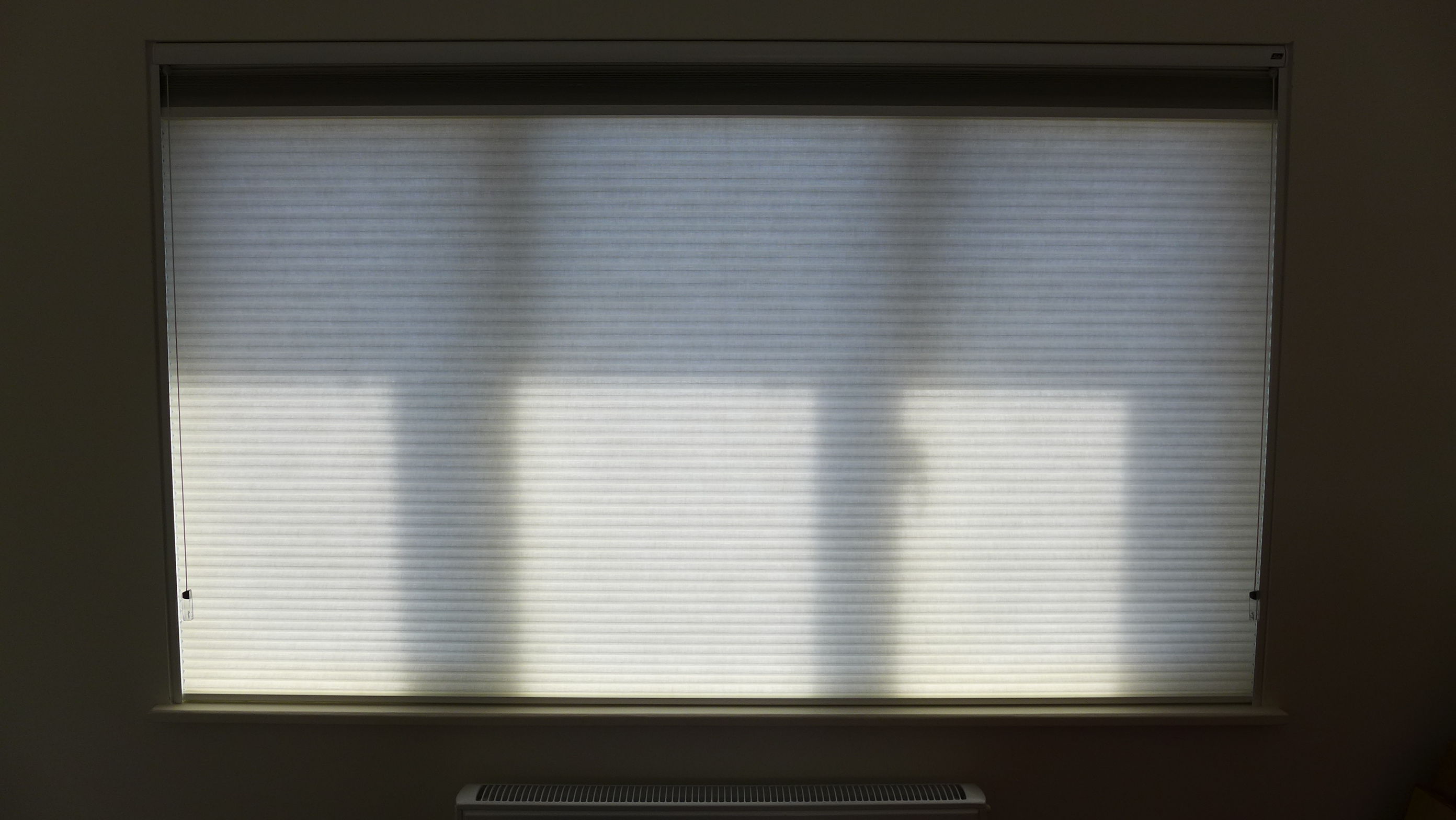
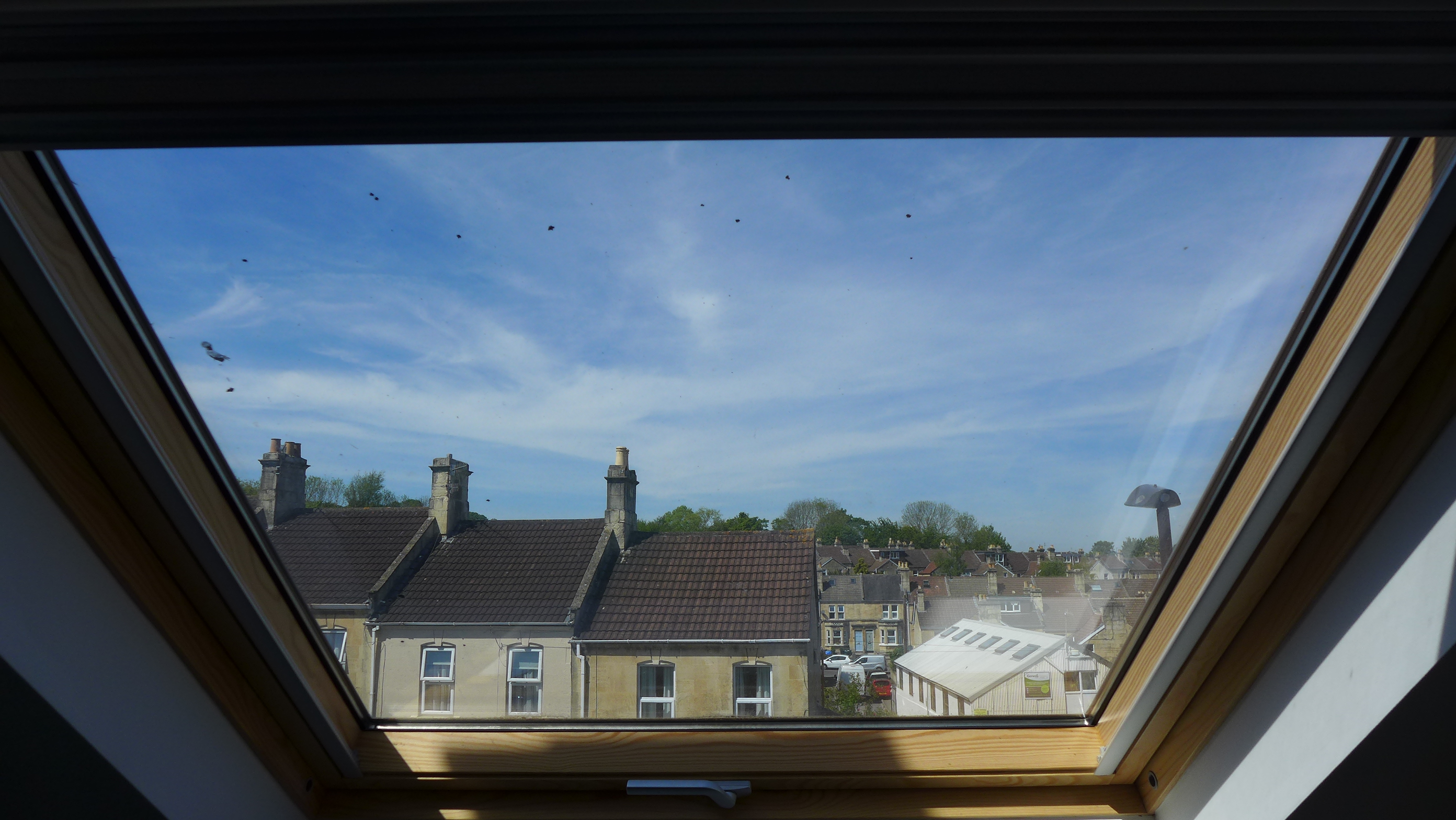
Day and night blinds suit clients who need a very dark room, with the option of a translucent panel, or no blind at all.
This particular design has side channels to minimise light bleed from the edges. Blackout is very important for people who work shifts and need a good day’s sleep. This blind has two smartcord controls: one for the blackout blind and the other for the translucent blind. You can adjust each in combination.




Roller blinds
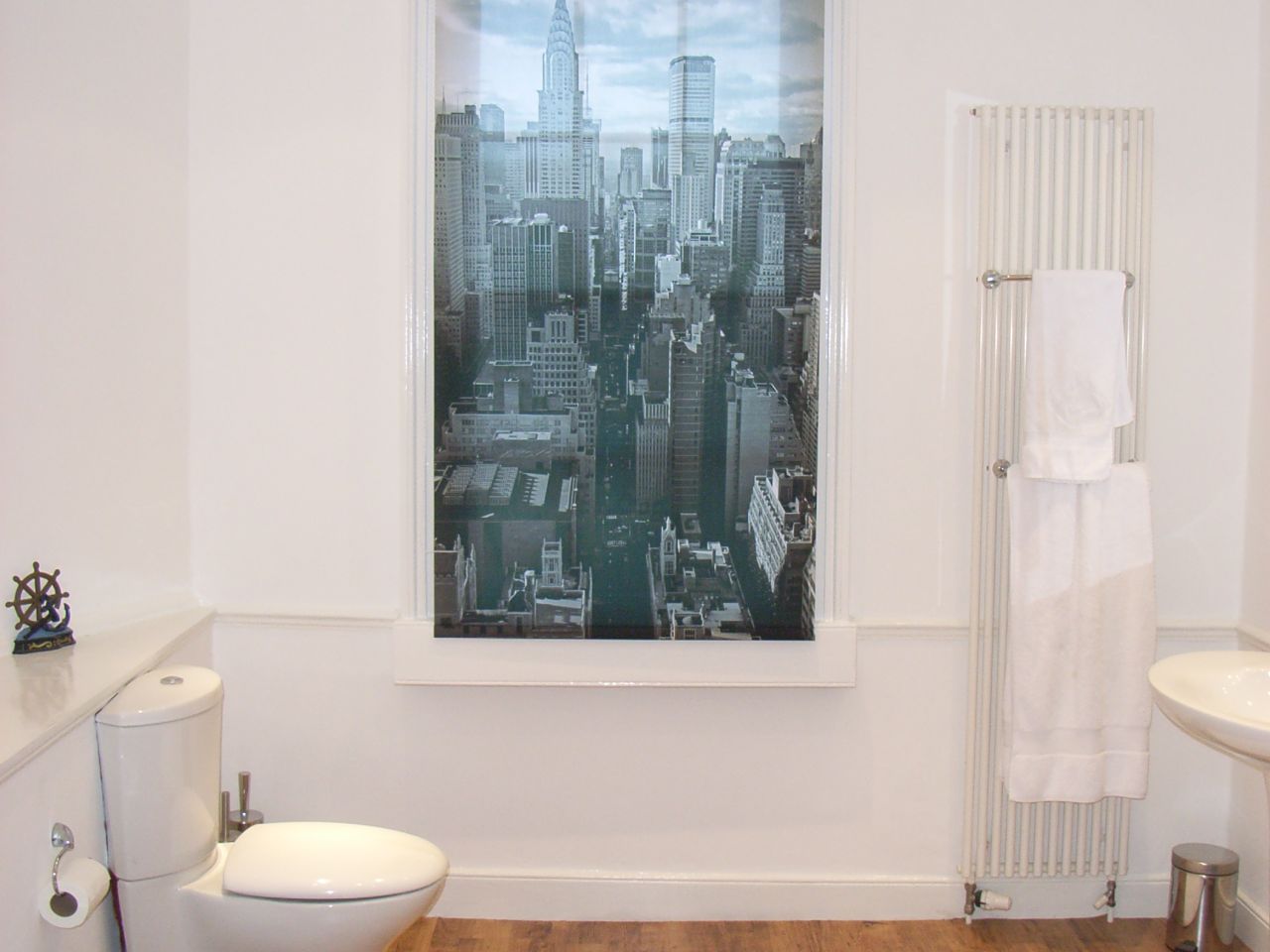
Prices for window dressings stretch from tens of thousands to less than £100. Roller blinds are at the more budget end of the scale, although you can find some fantastic ranges. Moisture-resistant fabrics are also easy to keep clean, particularly in kitchens and bathrooms.
Vertical and Venetian blinds
We don’t fit many Venetian blinds because of the need to dust the louvres. Having said that, we fitted a lovely chrome metallic Venetian in a bathroom recently which looked fabulous.
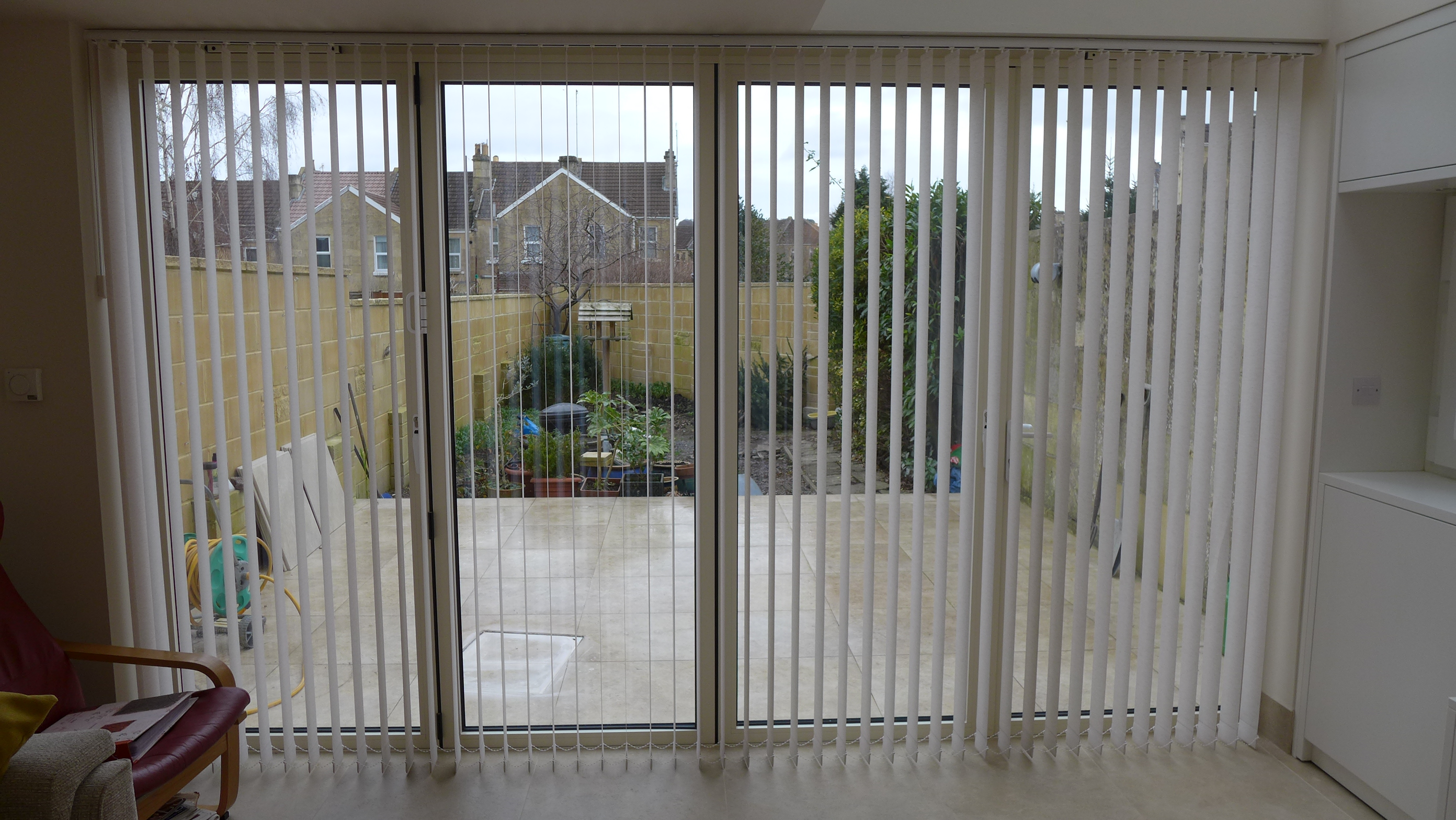
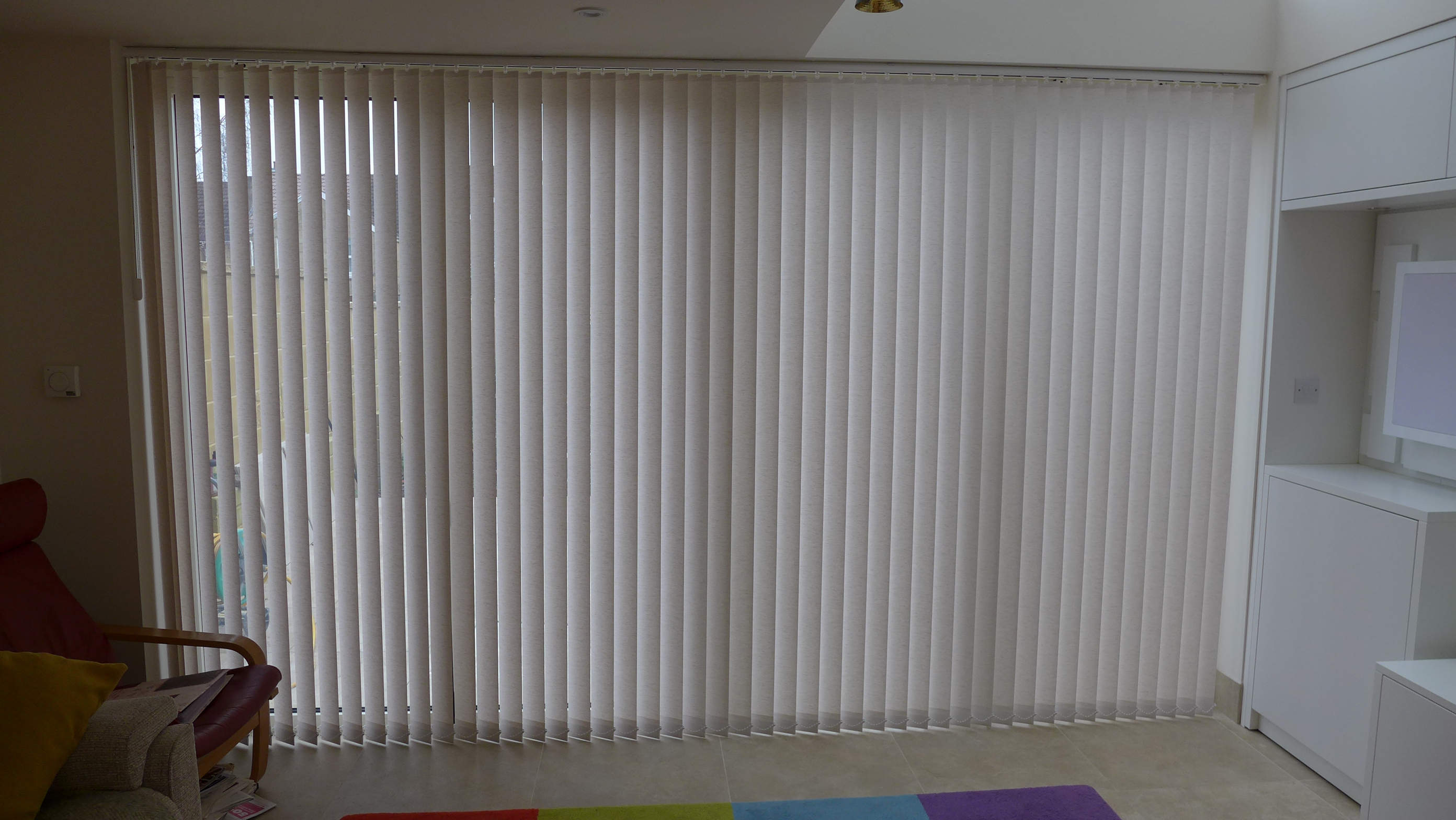
Some clients have an aversion to vertical blinds – usually, because they associate them with an office environment. But in some circumstances they particularly appropriate, providing privacy at the pull of a cord.

Vertical blinds are becoming more acceptable, particularly for bifold doors. In this south-west facing room, our clients can enjoy their new extension without glare from the sun.

Other window dressings
Shutters are still popular. We don’t have much call to fit them, but here was one example in a rental property. Shutters come in all shapes and sizes; even fan-shaped for arched windows.
No window dressing
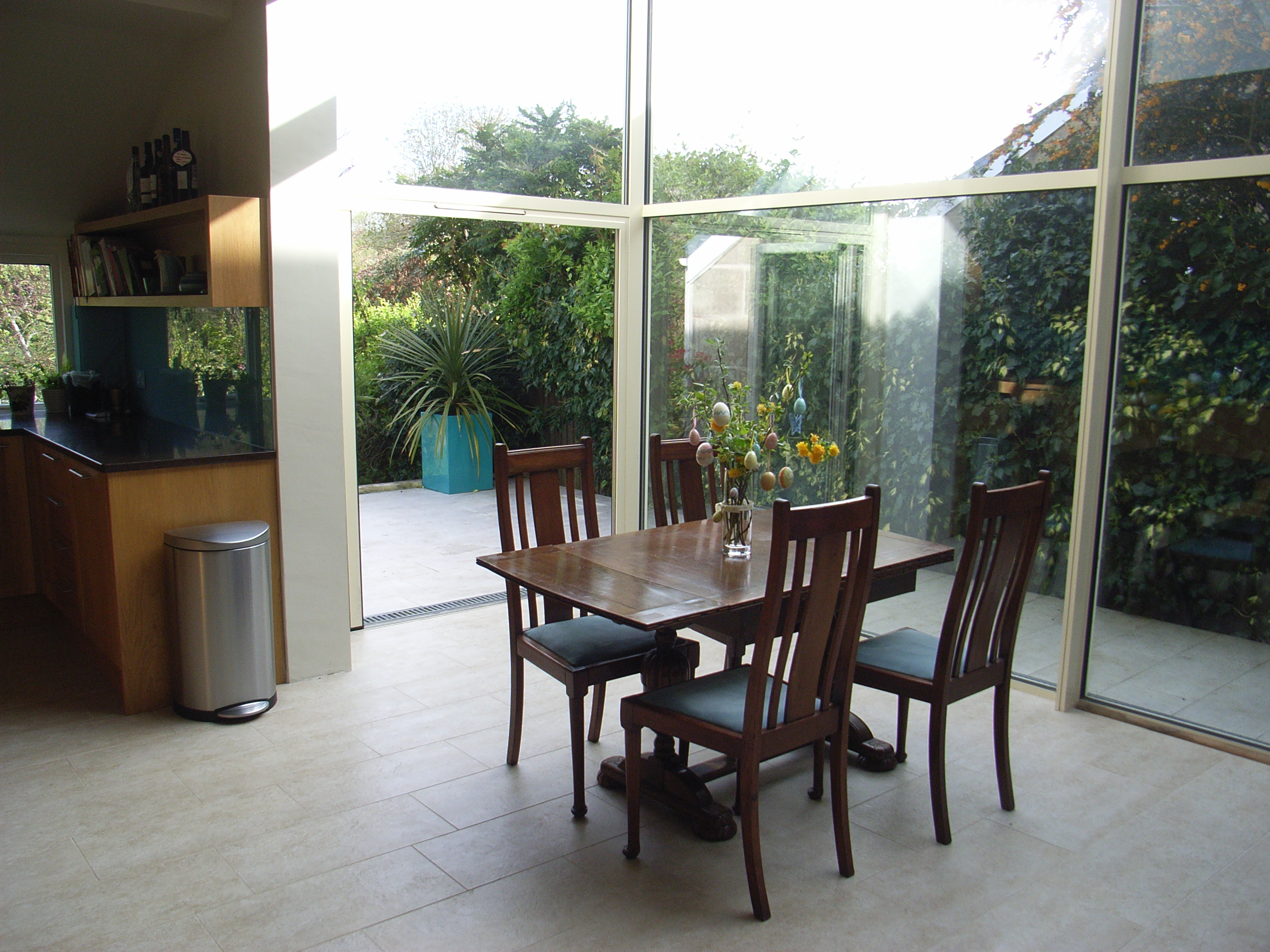
Ultimately, you should consider whether you need a window dressing at all. Our modern, unfussy, interiors with large expanses of glass, look great without blinds and curtains. We ask our clients to try living with no window dressing for a short time; initially resistant, we find that they are still living without curtains or blinds several years later.
