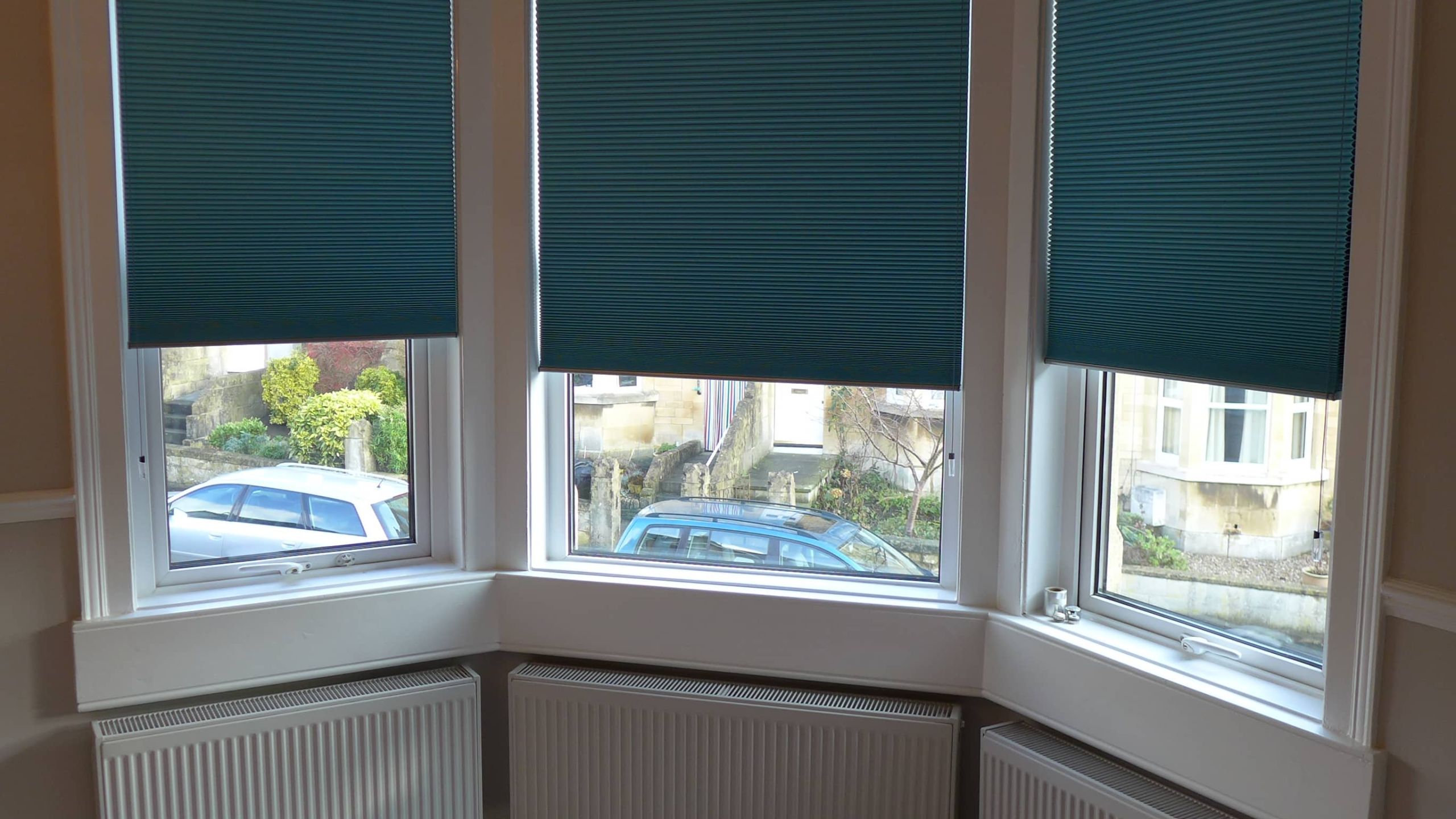
When we first reviewed pleated blinds, we had visions of those wonky, concertina, zig-zag screens common in conservatories. However, we were delighted to find a new honeycomb design that offers a neat, contemporary solution for dressing windows. If you don’t know much about these pleated blinds, here are a few points.

Duette blinds
In the image above, borrowed from Luxaflex, you’ll see how tightly you can draw up the pleats; when fully open against the headrail you get a good view through the window.

Smart cord
The very latest designs also have a smart cord – a kind of smooth ratchet system which does away with loops and chains – you simply pull the single cord once or twice and the blind rises; you pull at an angle and the blind glides down until you decide to stop it. Very neat.
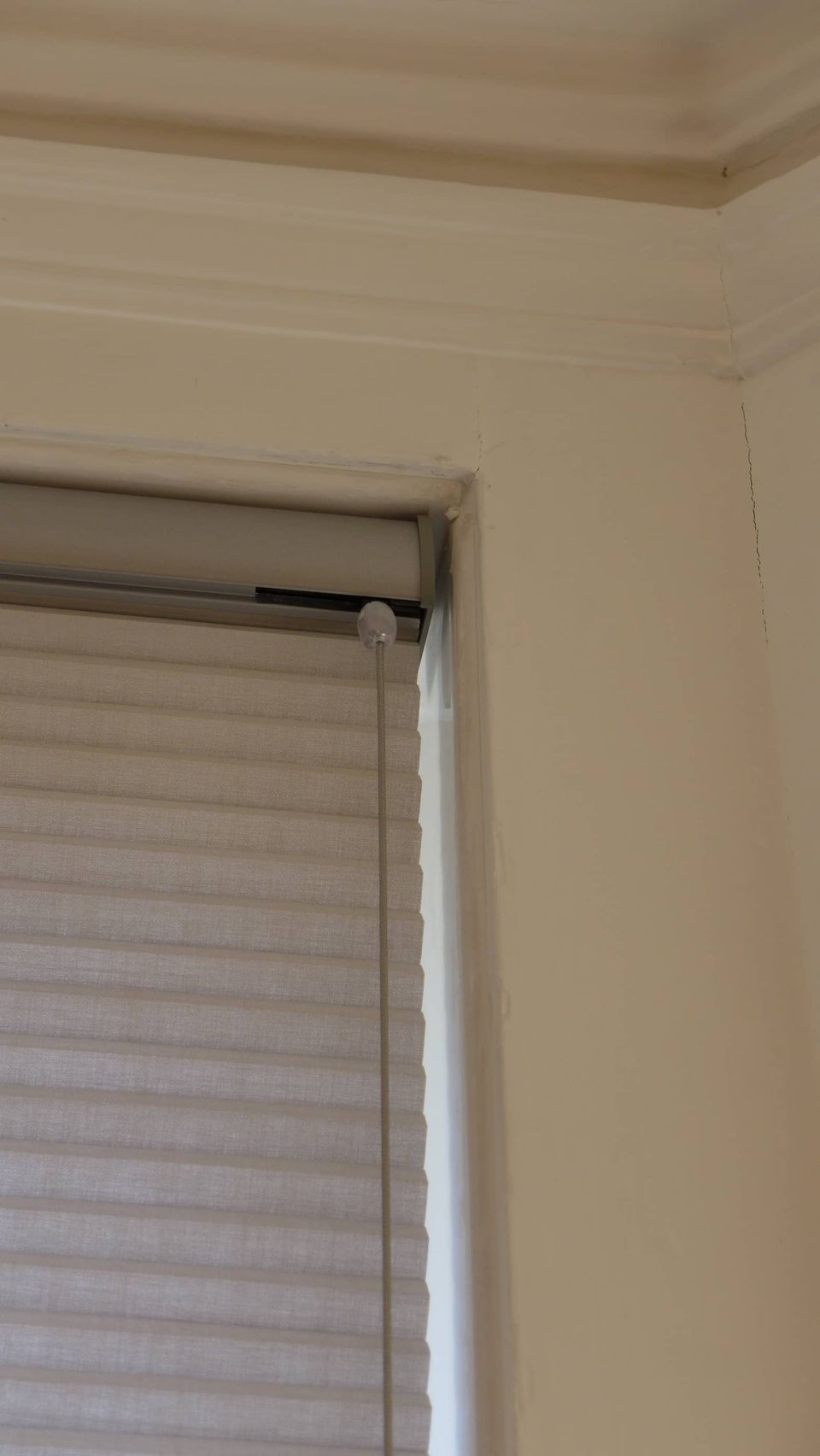
If you are looking to fit pleated blinds in a bay window, the smart cord headrails are slightly deeper so you’ll need to check that they don’t foul where they meet in a corner. In the first image below we decided on a design with a standard cord because the headrails would have touched and created a larger gap down the side. In the second image there was more timber between the windows so the smart cord headrail was fine.
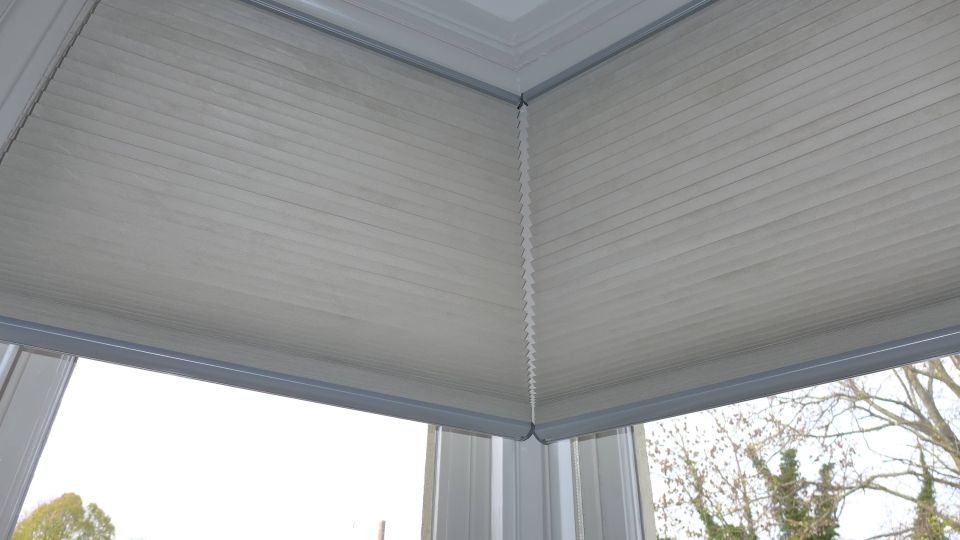
Note below the deeper separation between windows accommodating the larger headrail.

Black out blinds
Pleated blinds have varying levels of transparency, with a black out version achieved by inclusion of a thin opaque foil. With the edges of the blind running largely in line with the edges of the headrail, there is very little light spill from the sides (unlike a roller blind where the chain mechanism and brackets create a gap).
Pleated blinds
Pleated blinds are contemporary and smart, but not particularly cosy. If you want something warmer, you could look at our other ideas for window dressings. At time of writing, you’ll see a limited range of colours for these pleated blinds; mostly plain, with a few textures. However, they are well worth considering for a smart look in a contemporary setting.
