
Bathroom flooring, tiles and decoration

As with all the articles in this series, first you should read our bathroom design blog. It sets the scene for creating a bathroom where everything works well together – functionally and aesthetically. Then return to read about flooring, tiles and finishes.

Your perfect bathroom
Creating the perfect bathroom requires careful consideration of flooring, wall tiles, and finishes. Whether you’re planning a traditional country bathroom or a sleek contemporary space, understanding your material options will ensure lasting results.
Essential Bathroom Flooring Options
Porcelain and Ceramic Floor Tiles
Porcelain tiles are highly durable. Available in thicknesses from 6mm to 20mm, large format tiles (600x600mm to 1200x600mm) create seamless, modern aesthetics with few grout lines. Smaller formats like 300x300mm or 200x200mm suit traditional designs perfectly. Porcelain sales volume has overtaken ceramic in the UK so will offer a wider choice. You will also find more “through body” colour in porcelain, whereas ceramic will show the traditional terracotta colour at the edges.
Surface finishes range from polished to heavily textured. Matt finishes provide superior slip resistance for wet areas. Textured surfaces offer enhanced grip but require more maintenance effort.

Natural Stone Flooring
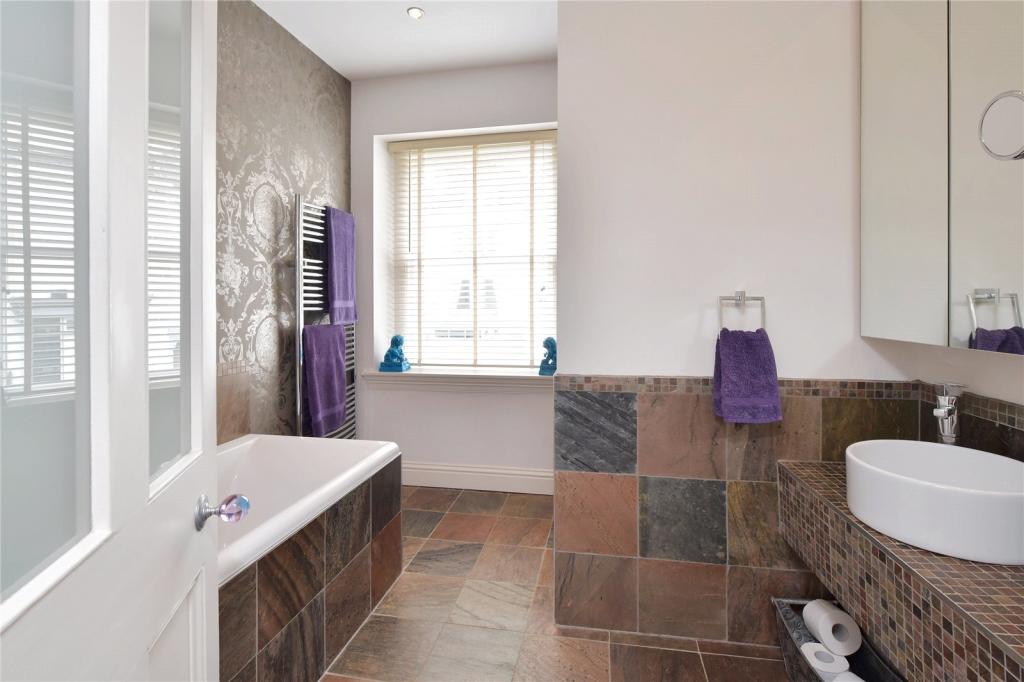
Limestone, travertine, and slate bring authentic character to bathroom spaces. Thickness typically ranges from 10mm to 30mm, with honed finishes preferred over polished for safety reasons.
Natural stone requires sealing before installation and regular maintenance thereafter. Travertine’s natural holes create unique patterns but need filling for smooth surfaces. Slate’s natural texture provides excellent slip resistance.
Luxury Vinyl Flooring
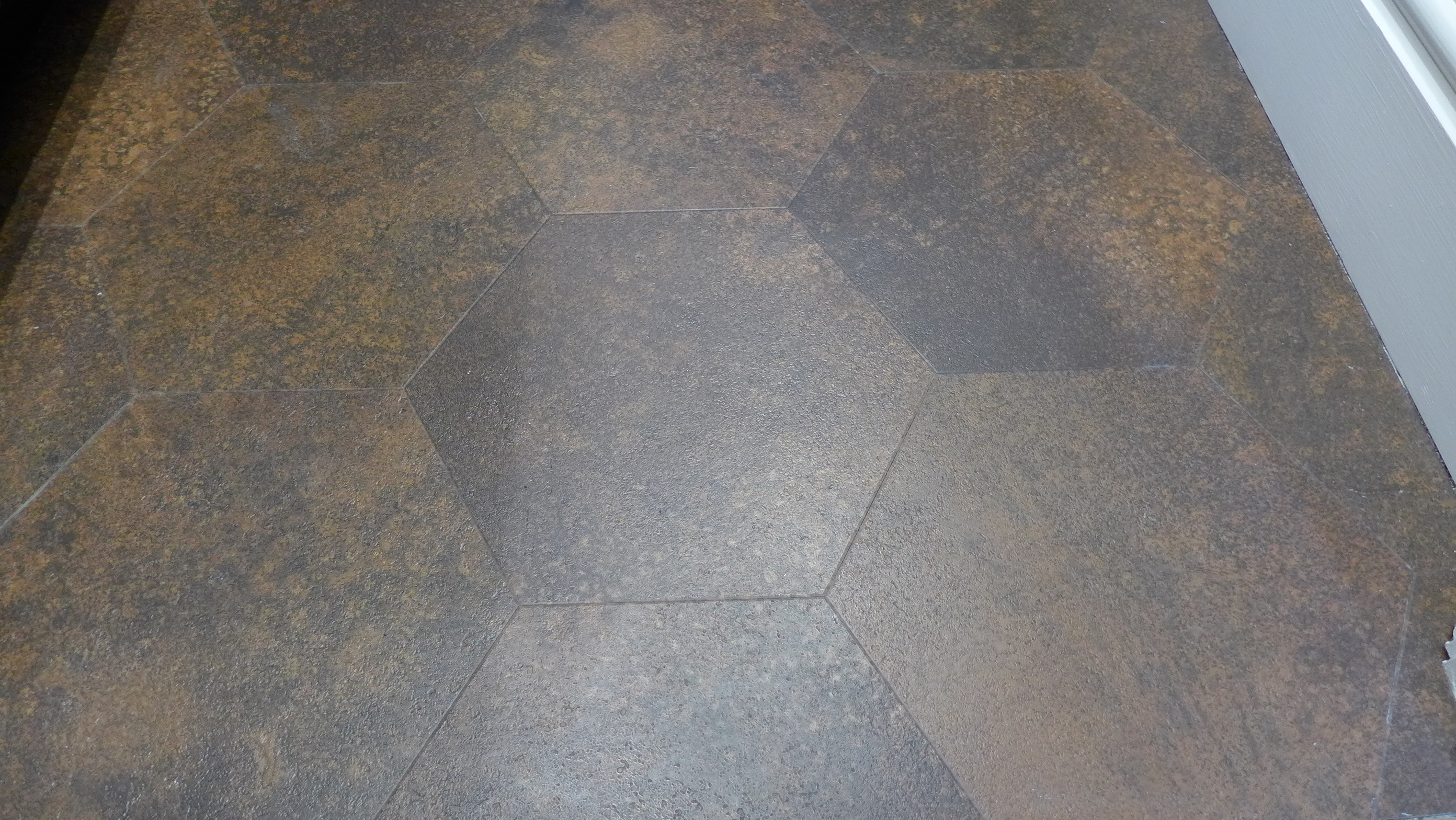
Modern luxury vinyl planks (LVP) and tiles (LVT) are remarkably realistic whilst providing practical benefits. Available in thicknesses from 2mm to 8mm, these products offer wood-effect, stone-effect, metallic, abstract and other finishes. They are warmer to the touch than porcelain and stone.
Most ranges offer a feature strip (from 3mm wide) giving the effect of a grout line
Other flooring
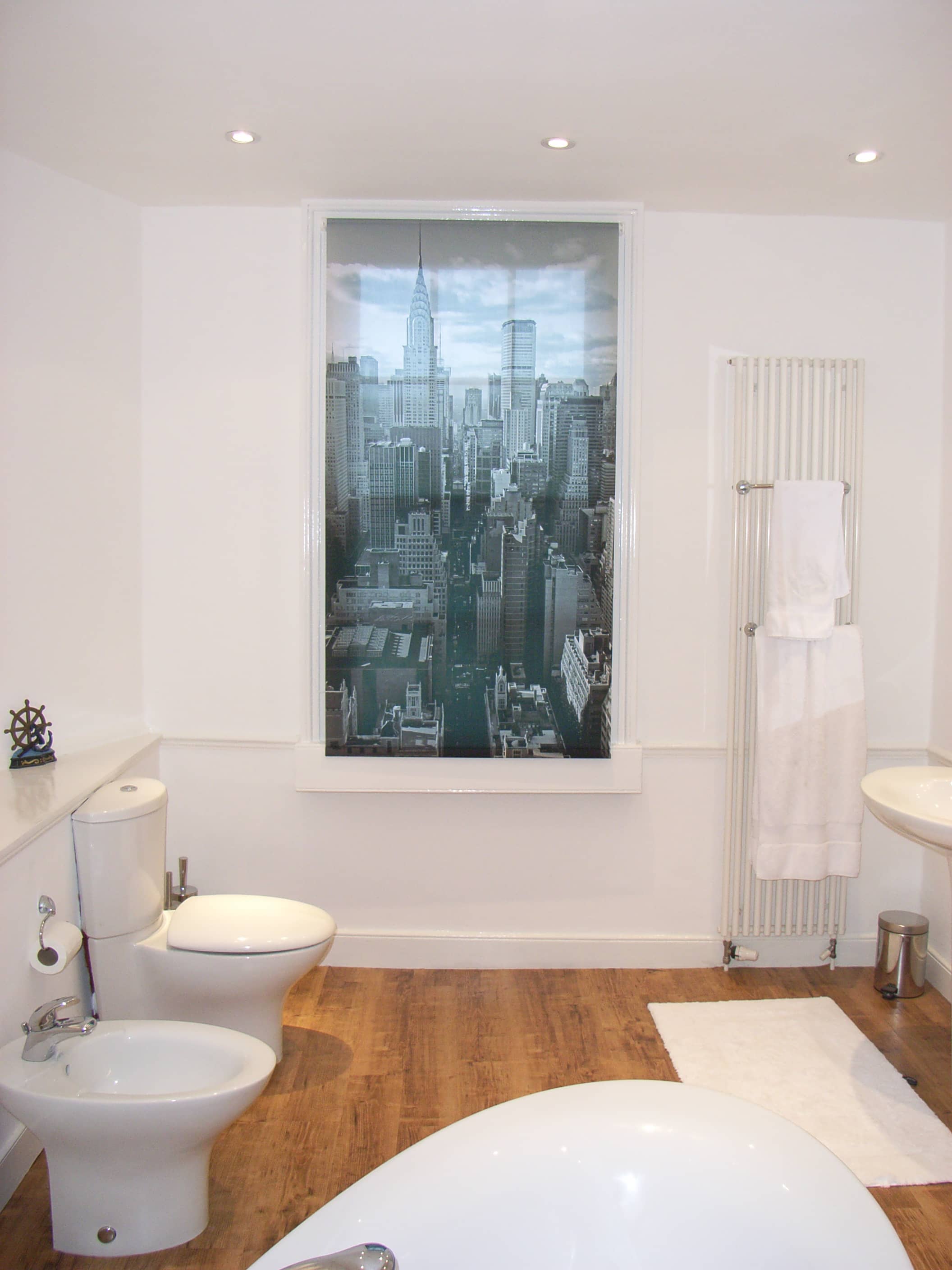
Normally, timber would not be recommended for a wet area but some bathrooms, particularly in traditional settings, inherit a wooden floor. Key to practicality is to seal the floor with an oil or varnish and to maintain this in high traffic areas.
Laminate offers a cheaper option; higher quality products are waterproof, but it is still a good idea to mop up any significant spills to protect the joins.
Click vinyl products offered by companies such as Amtico are marketed for easy installation.
Floor laying patterns
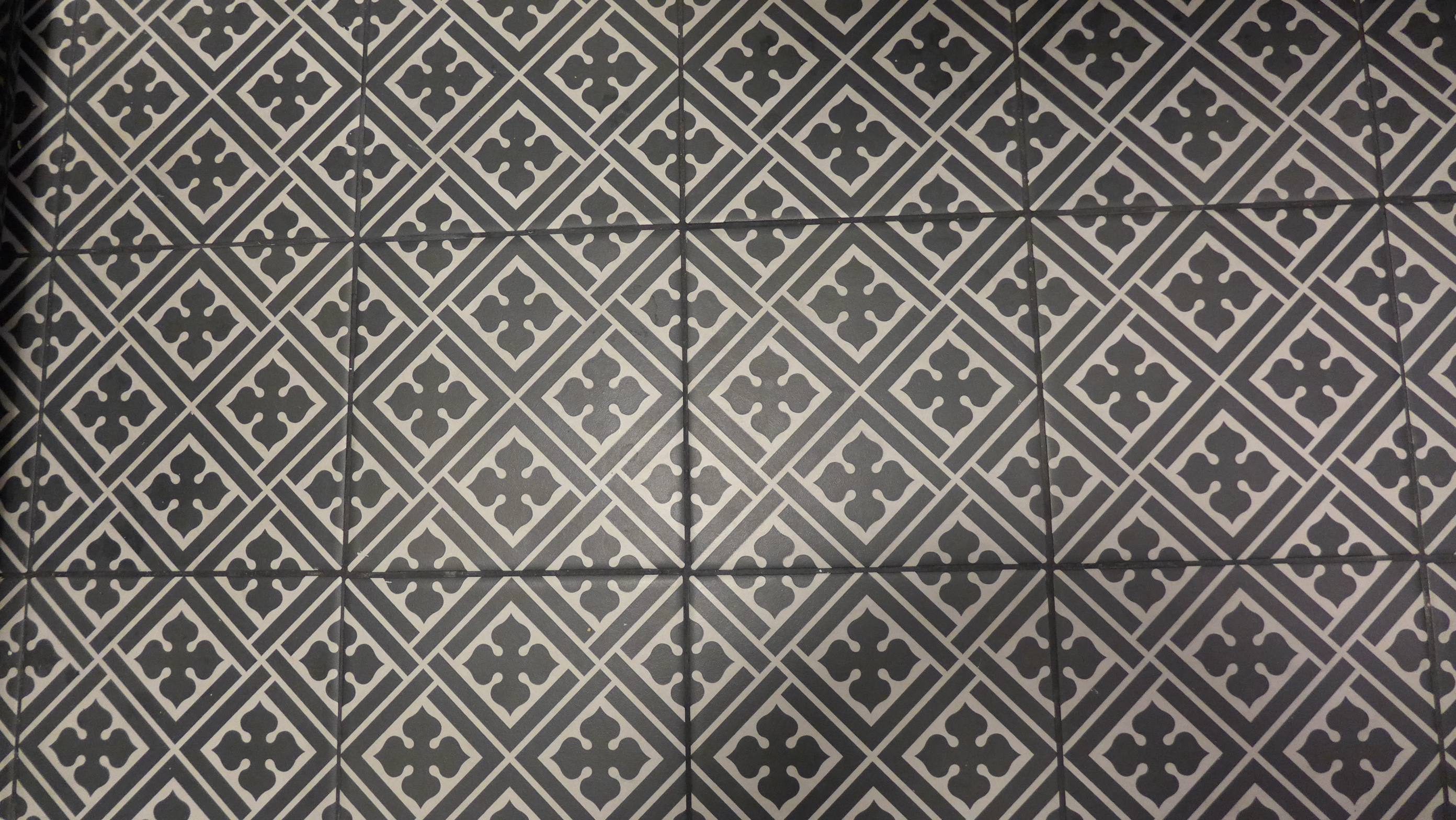


Not only do you need to consider the decorative pattern in the tiles, but also the laying pattern of the tiles. This applies to floors and walls. Here are some popular options, but you can see many more on-line. The important point to take from this article is to consider the most appropriate laying pattern for your choice of tiles.
Planks
Typically for a wood effect plank, look for a vinyl tile plank, porcelain plank or, indeed, wood itself, in longer lengths to be cut and staggered. This is preferable to cheaper options with shorter lengths, and always avoid lining up the planks, which looks unnatural. Try to choose a design with subtle pattern repeat – remember these designs are fabricated from larger sheets with a repeat. Most repeats are unavoidable, but ask your fitter to move pieces around, and swap their orientation to minimise the regular wood knot, or other obvious feature.
Rectangular and square tiles
Some people like to line up their tiles in a regular design, giving a clean, uniform look to the space. Others prefer a brick pattern for more interest and some rooms may require a random laying pattern in one direction, particularly if the walls are out of square. Some people will lay tiles diagonally across a room – just remember that this generally creates more work and you may end up with small pieces at the edges and corners which are hard to cut.
Decorative tiles are usually laid with a regular grid or stack bond arrangement so the patterns line up.
Hexagonal and other tile shapes and laying patterns
Hexagonal and diamond tiles shapes add visual interest. Some suppliers also provide sets of a mix of different geometric shaped tiles which tesselate in clever patterns for a more special effect. Chevron patterns add sophistication, being a modern take on the more traditional herringbone design.
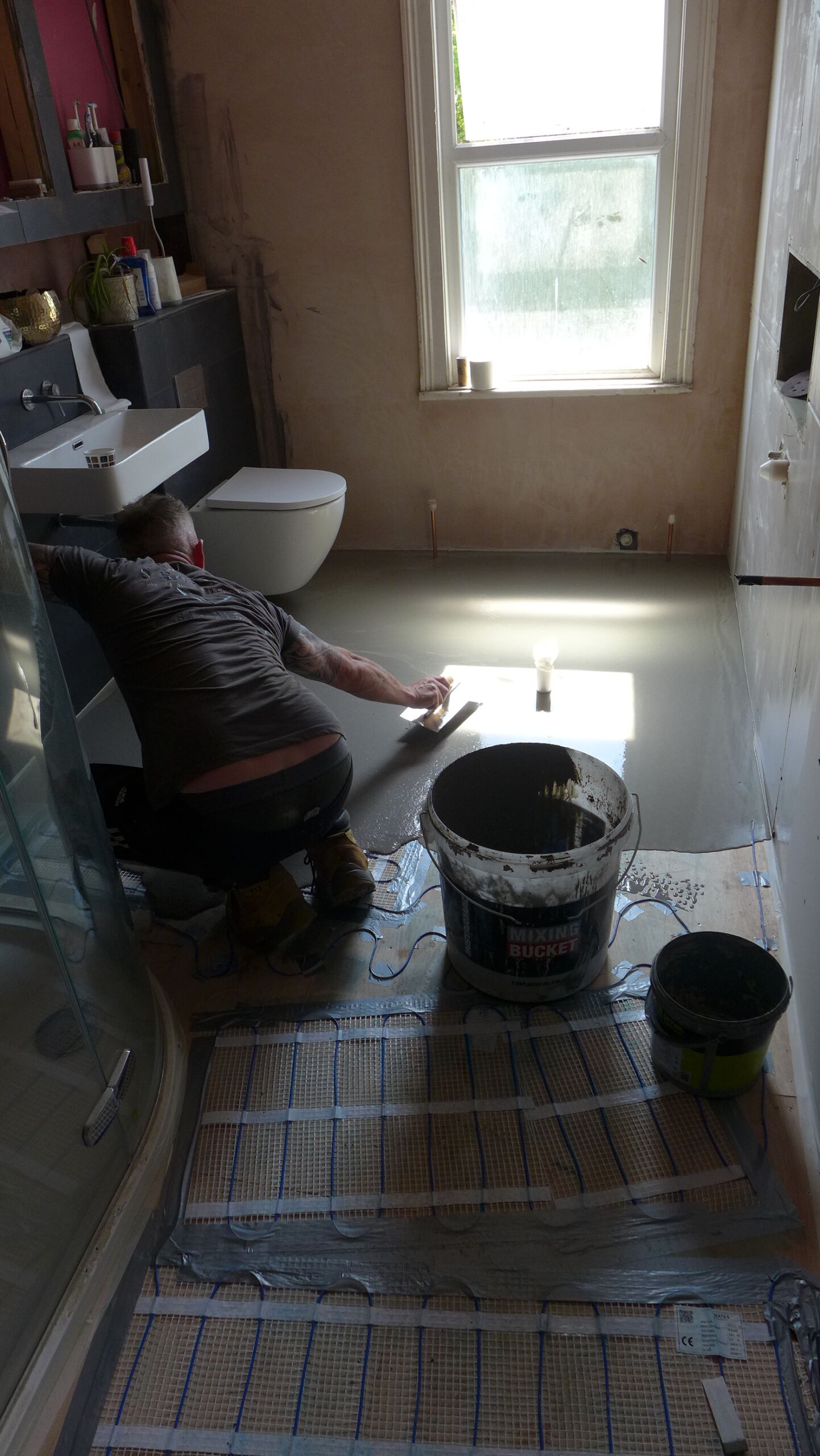
Bathroom underfloor heating
It goes without saying that you should discuss these details with your supplier, but porcelain, LVT, and wood all work with underfloor heating (UFH) on solid or suspended floors – typically a loose wire or heating mat in a small space like a bathroom. This needs coordination with the contractor. The key is the preparation. LVT, for example, may require a ply substrate (as a flat surface), and 10-12mm of levelling compound to cover the heating element, and adhesive suitable for UFH.
Wall Tiles: Creating Visual Impact
Ceramic and Porcelain Wall Tiles
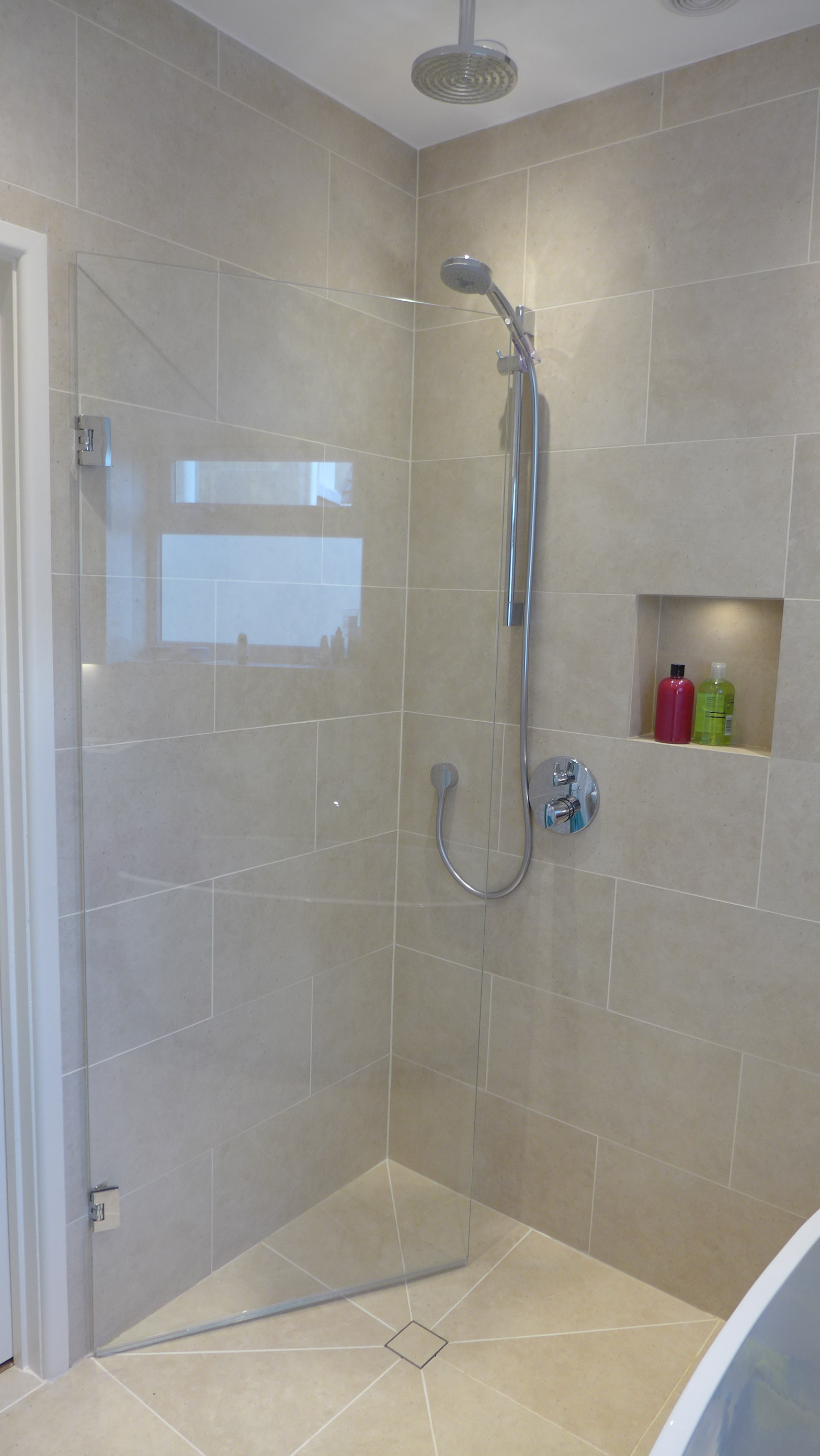
Wall tiles typically measure 6mm to 12mm thick, lighter than floor versions. Popular sizes include 150x150mm for traditional looks, 200x300mm for contemporary designs, large format 600x300mm for modern aesthetics, and also very large format.
Metro tiles (75x150mm) remain timelessly popular, especially in brick bond patterns. Metro tiles create classic charm, whilst penny rounds add vintage character.
Surface finishes dramatically affect ambiance. Gloss tiles reflect light beautifully but show watermarks. Matt finishes hide marks better whilst textured surfaces add tactile interest.
Natural Stone Wall Tiles
Marble remains a popular choice for luxury bathroom design. Carrara, Calacatta, and Emperador varieties each offer distinct veining patterns. Stone thickness ranges from 10mm to 20mm for wall applications.
Travertine walls create spa-like atmospheres, particularly when combined with matching floors.
Glass Tiles
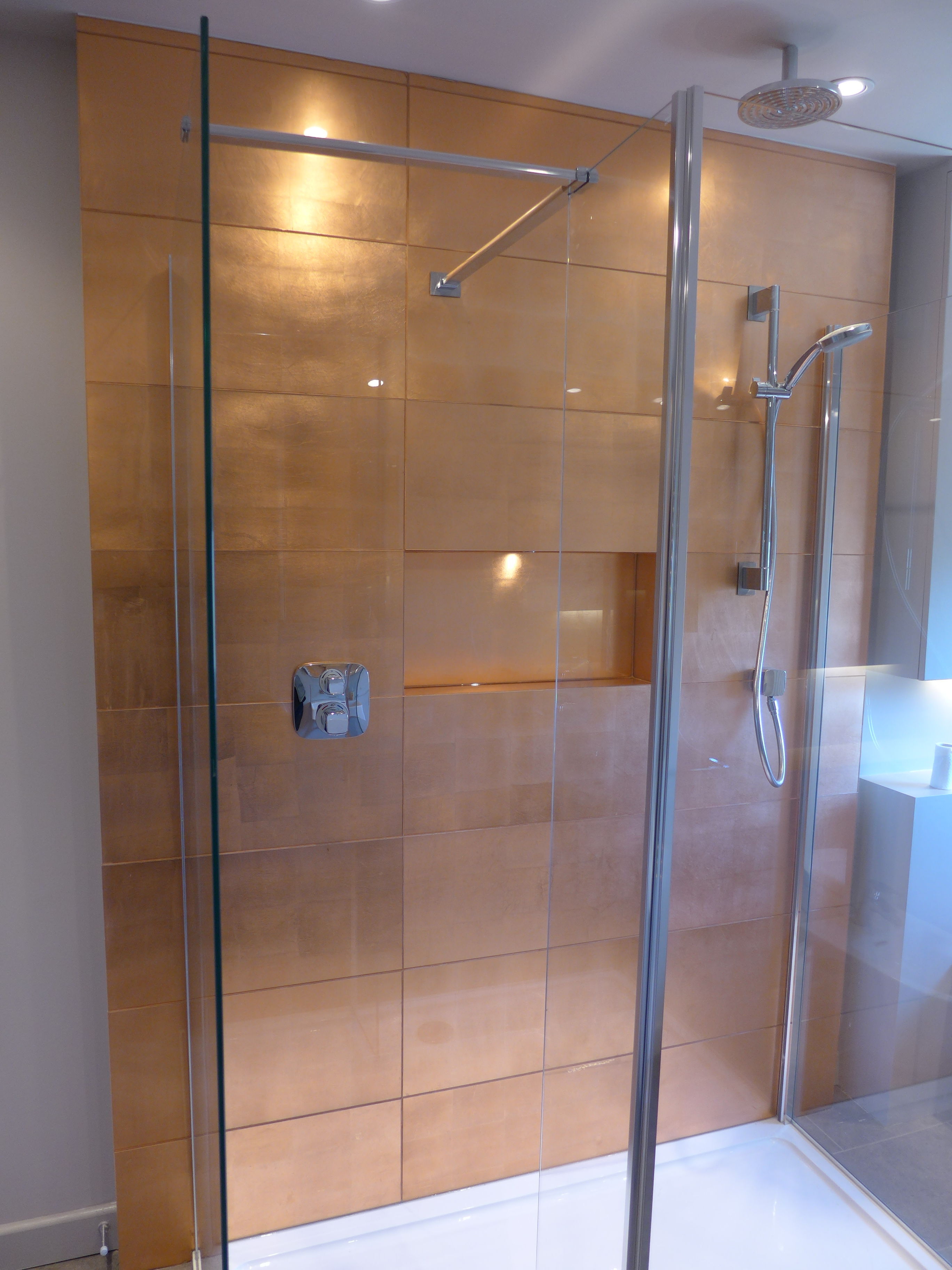
Glass tiles reflect light magnificently, making small bathrooms appear larger. The copper tiles in this bathroom have an acrylic backing for strength and stability. Your contractor will need to be confident in drilling these products which, as you can see, is perfectly possible.
You might find a glass mosaic feature strip separating larger tiles, or just fitted along the top edge of low-level tiling. This adds sparkle and a stylish way of breaking up a plain, uniform design.
Wall Tile laying patterns
Similar to floor laying patterns described earlier, a straight stack creates modern geometry, whereas brick bond offers a traditional appeal. Herringbone adds sophistication. Talk to your supplier to work out which laying pattern works best with your chosen tiles.
Alternative Wall Finishes
Bathroom Wallpaper

Modern vinyl wallpapers specifically designed for bathrooms resist moisture effectively, although it may be best to fit in areas of low humidity like a cloakroom. If you are fitting this yourself, check the recommended adhesive, and seal edges carefully around fixtures.
Timber Cladding
Properly treated timber creates warm, natural atmospheres. Cedar and teak naturally resist moisture, whilst engineered woods offer stability. Thickness ranges from 12mm to 25mm for wall applications.
Ensure adequate ventilation behind timber to prevent moisture buildup. Regular oiling maintainsappearance and protection.
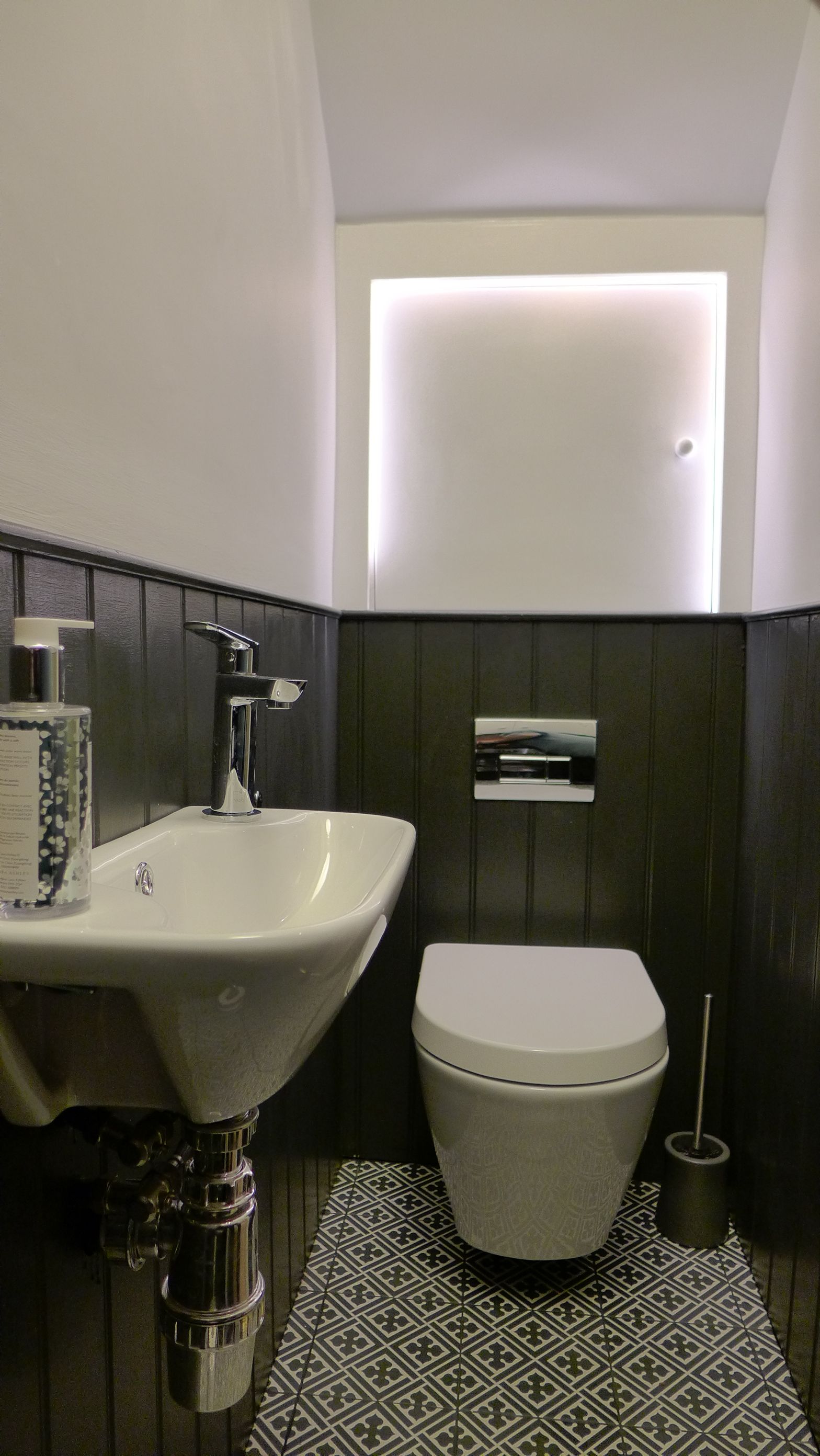
For a cheaper alternative, fit moisture-resistant MDF matchboard which comes as sheet, pre-machined with tongue-and-groove effect, ready to paint. The photo above shows this fitted as wainscoting below the dado, providing a natural splashback for the basin. A coat of clear varnish provides an extra layer of water-proofing and wipeable surface around the basin and wc.
Glass Panels
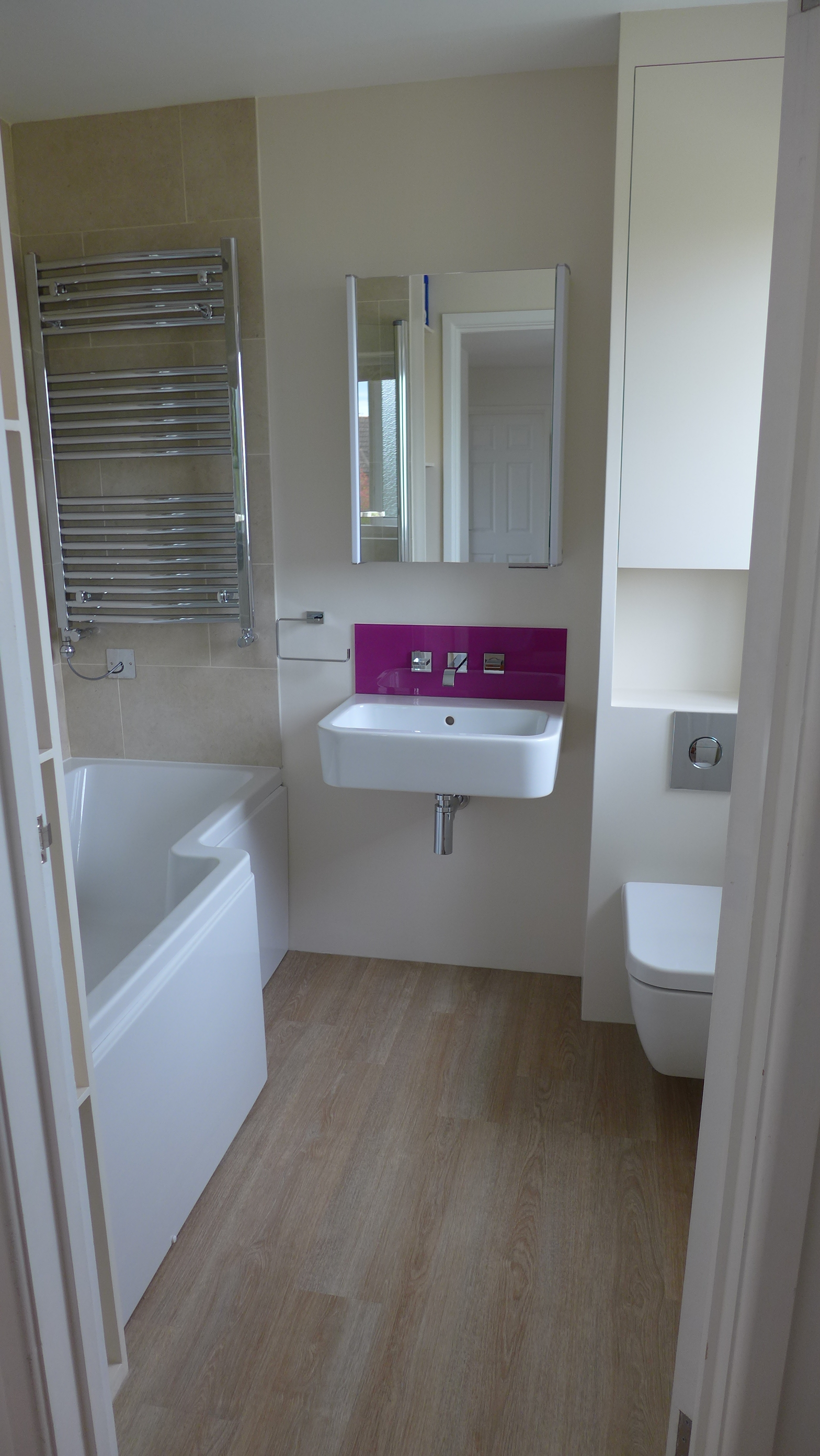
Back-painted glass creates seamless, hygienic surfaces perfect behind basins and showers. Available in any colour, these panels eliminate grout lines entirely.
Installation requires precise measurements and professional fitting. Support systems must accommodate glass weight appropriately.
Tadelakt
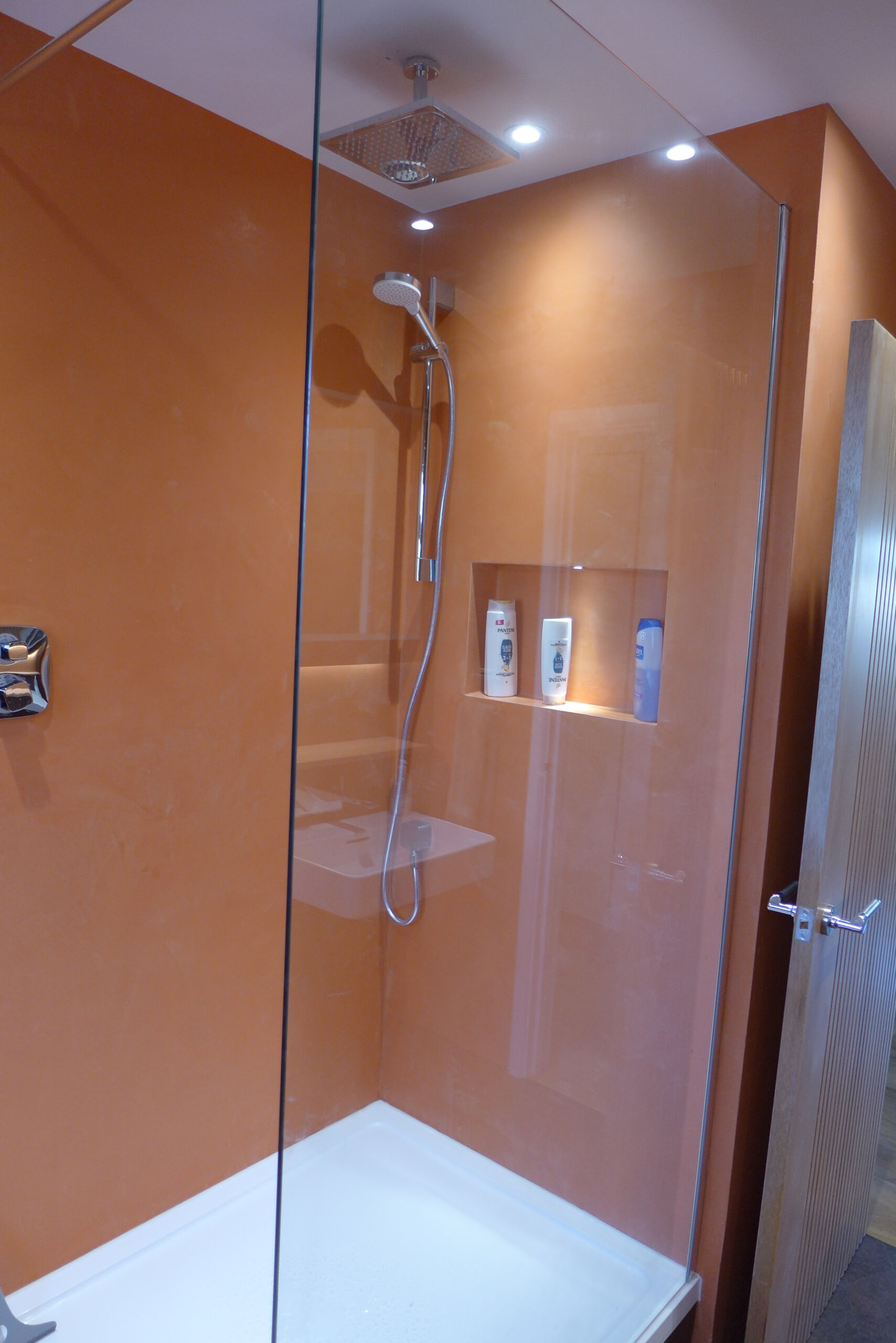
This Moroccan lime plaster technique creates waterproof, soap-like surfaces. Applied in multiple thin coats, tadelakt develops unique organic textures.
Skilled artisans achieve best results. Maintenance involves periodic soap applications to maintain waterproofing.
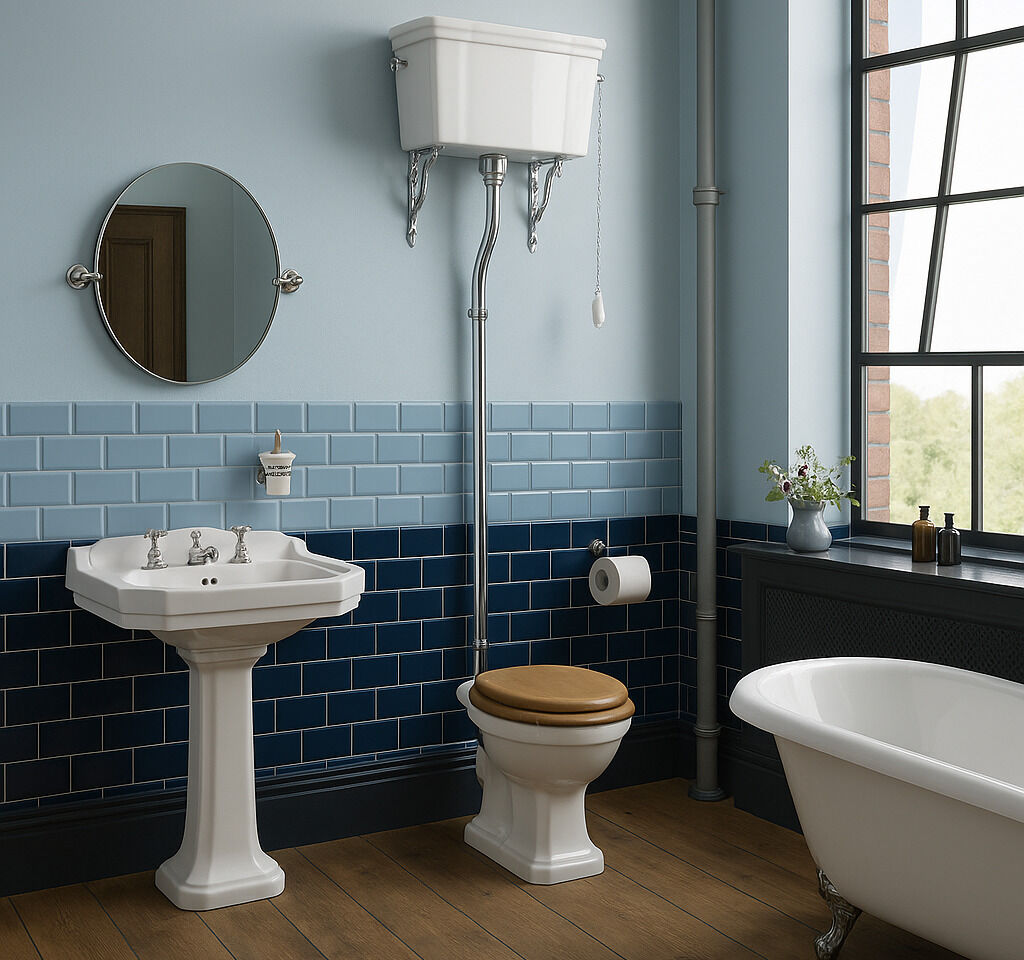
Traditional v Modern Bathroom Styles
Traditional bathrooms favour smaller format tiles, natural materials, and classic patterns. Victorian encaustic tiles, subway tiles in brick bond, and natural stone create authentic period character.
Modern spaces embrace large format tiles, minimal grout lines, and geometric patterns. Rectified edges enable tight joints, whilst neutral colours create serene environments.
Contemporary design often mixes materials – combining timber with concrete-effect tiles or pairing marble with metal accents.

Installation Considerations
Substrates
Floors require stable, level substrates. Concrete screeds or exterior-grade plywood provide a suitable base. If installing porcelain tile on a suspended floor, it would be advisable to remove old floorboards and replace with 20mm exterior ply screwed every 200mm. This should avoid cracks appearing over time in the grout or, worse, the tiles.
Wall substrates must be plumb and moisture-resistant; tile-board is most reliable for a shower enclosure.
Adhesives and Grouts
Flexible adhesives accommodate building movement. Epoxy grouts resist staining better than cement-based alternatives; grouts come in many colours these days to either match or contrast with the tiles. Silicone sealants provide flexible waterproof seals around fixtures. Always best to consult your supplier if unsure .
Drilling Techniques
Use diamond-tipped bits for ceramics and glass. Start slowly to prevent cracking. Fit a short length of masking tape to the target to provide some grip and prevent the tool from wandering on smooth surfaces.
Tile Trims
Whilst not to everyone’s taste, edge trims provide professional edges and protect tile corners. Available in aluminium, stainless steel, and brass finishes, as well as some colours to coordinate with the tile. External corners particularly benefit from protective trims.
The alternative is to expose the tile corners to give a more cohesive look. Some edge trims can look uncoordinated, particularly when some are horizontal, and some vertical. Revealing the tile edge can look more coherent, particularly for through-body tiles where the colour at the edge matches the tile base.
Skirtings
Some people like to see an uninterrupted plastered wall, whilst others may prefer a tiled or timber skirting. This does provide a neat, crisp finish, hiding any gapping with the flooring (the skirting is installed after the floor is installed). Typically, with a tiled bathroom floor, the skirting may be cut from additional tiles (typically 100-120mm high). Alternatively, people may prefer an off-the-shelf timber skirting.
Bathroom flooring, tiles and finishes
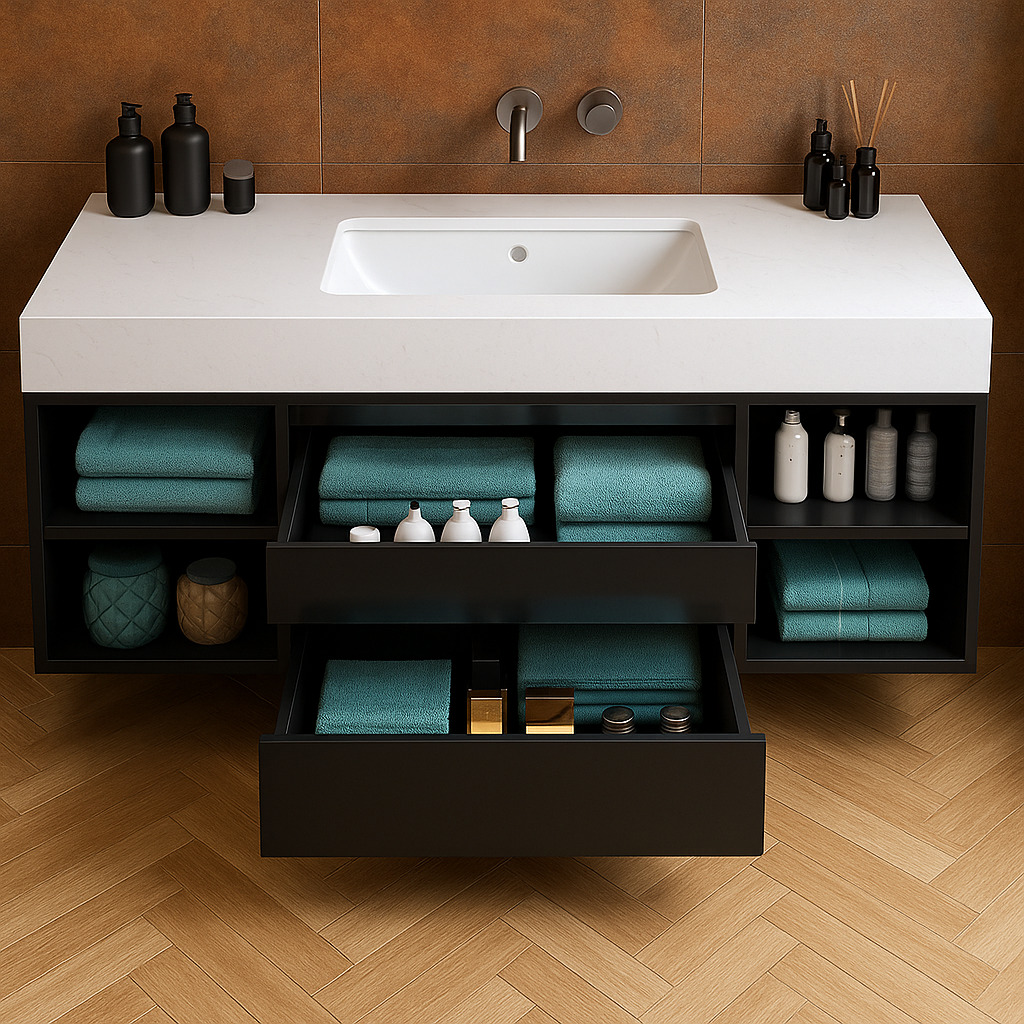
Successful bathroom design balances aesthetic qualities with practical requirements. Understanding material properties, installation requirements, and maintenance needs ensures your bathroom renovation delivers lasting satisfaction.
At Style Within, we offer guidance tailored to your specific requirements, integrating seamlessly with your bathroom vision.
If you want to discuss ideas with us, please get in touch and we’ll help you choose the best flooring, tiles and finishes for your space, lifestyle, and budget.
