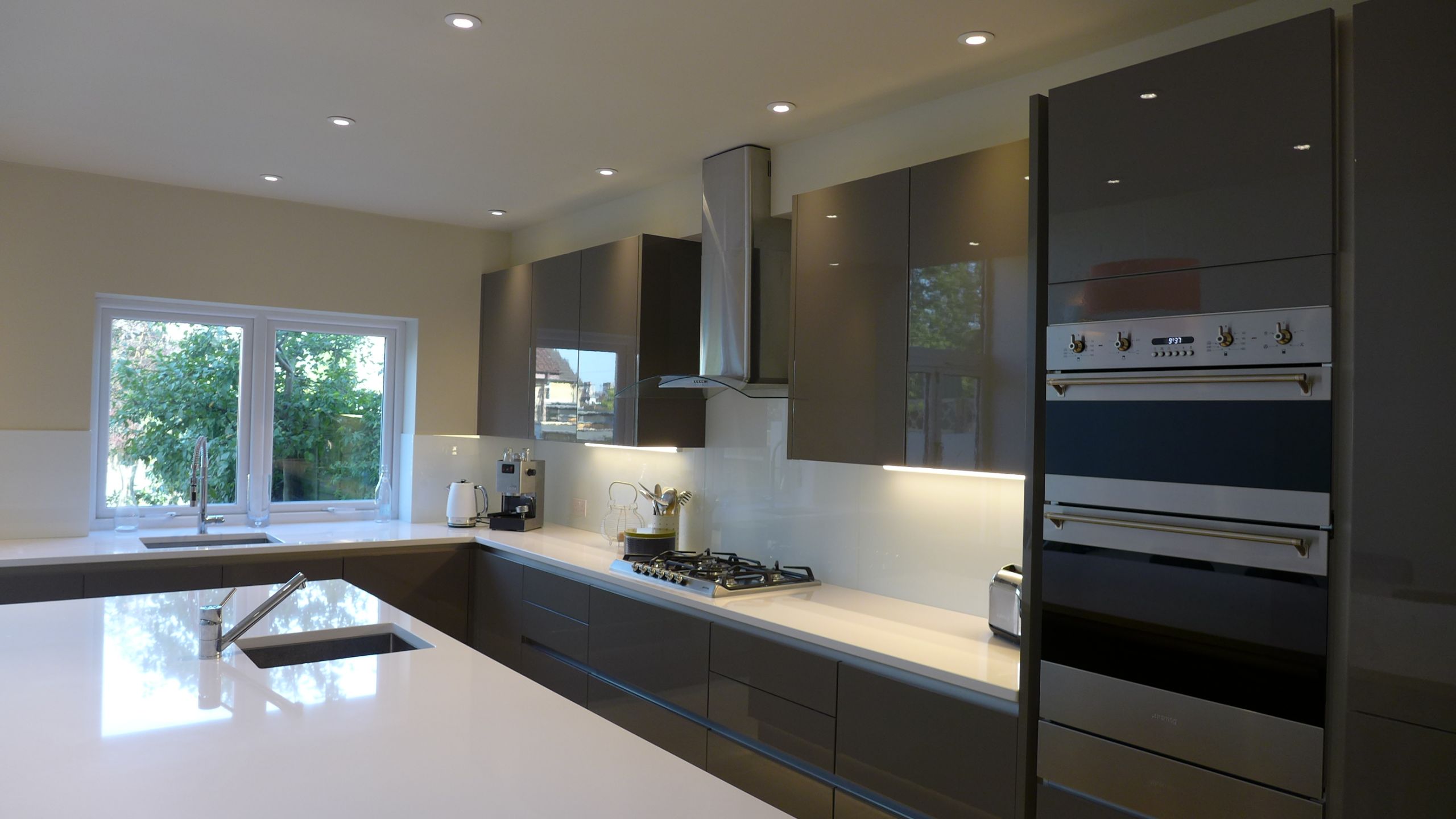
You may be thinking of doing up your home, but how do you control the cost? If you are planning a refurbishment, this article offers tips and advice for making sure your dreams remain affordable.

“We’ve gone over budget”
Words often heard on TV property shows. The two main reasons for this are:
- the owners didn’t start out with a realistic figure for the main features of the project, and
- they didn’t appreciate all the other costs that accompany a renovation.
I can put my hand on my heart and say that we have never had a project go “over budget”. There are four key ingredients for controlling cost: a taut specification, a fixed price, an appropriate payment schedule, and understanding the totality of the task (and hence the total cost). We spend an age on the first, tie down prices for the second, agree suitable payments for the third, and detail everything for the fourth. You can do the same.
You’ll find links at the foot of this blog to advise you further on successful house renovation, as well as a guide on what things cost.
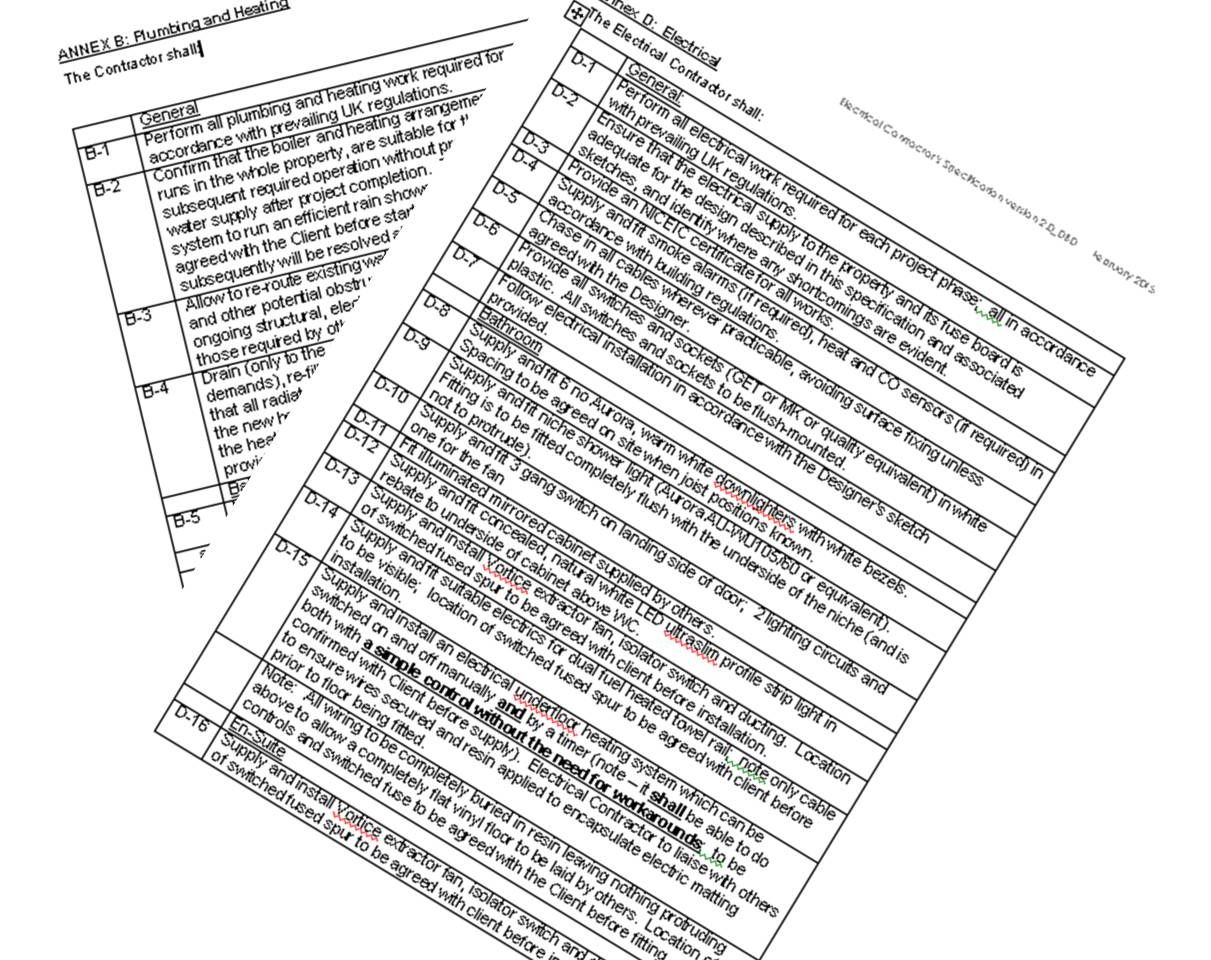
Home renovation specification
A key factor in controlling the cost is a taut specification. This pre-supposes the following:
- you are clear on your requirement and won’t make significant changes part-way through.
- you have detailed construction drawings for projects with structural changes.
- you have produced a floorplan to scale and identified electrical, lighting and heating requirements.
- you have scale kitchen and bathroom designs.
- you have a good idea of finishes, fixtures and fittings.
- you are clear on what a contractor is to supply and what you will supply.
- you have written down what the contractor is to do
- you have written down what else needs to be done by others.
- you have done your homework and have a realistic expectation of what things cost, and how long they take.

It helps to separate the specification into the contractor’s five main trade annexes:
- structural and building;
- plumbing and heating;
- carpentry and joinery;
- electrical; and
- decoration.
We also reserve an extra annex for “other” which may include works to the garden or patio. We and our contractors find this easier than a room-by-room separation, particularly for larger projects. Each annex effectively forms a package of work to be handed to a specific trade, which may be a sub-contractor.
Each requirement, or group of requirements, in your specification should be priced. This populates the first section of your pricing spreadsheet.
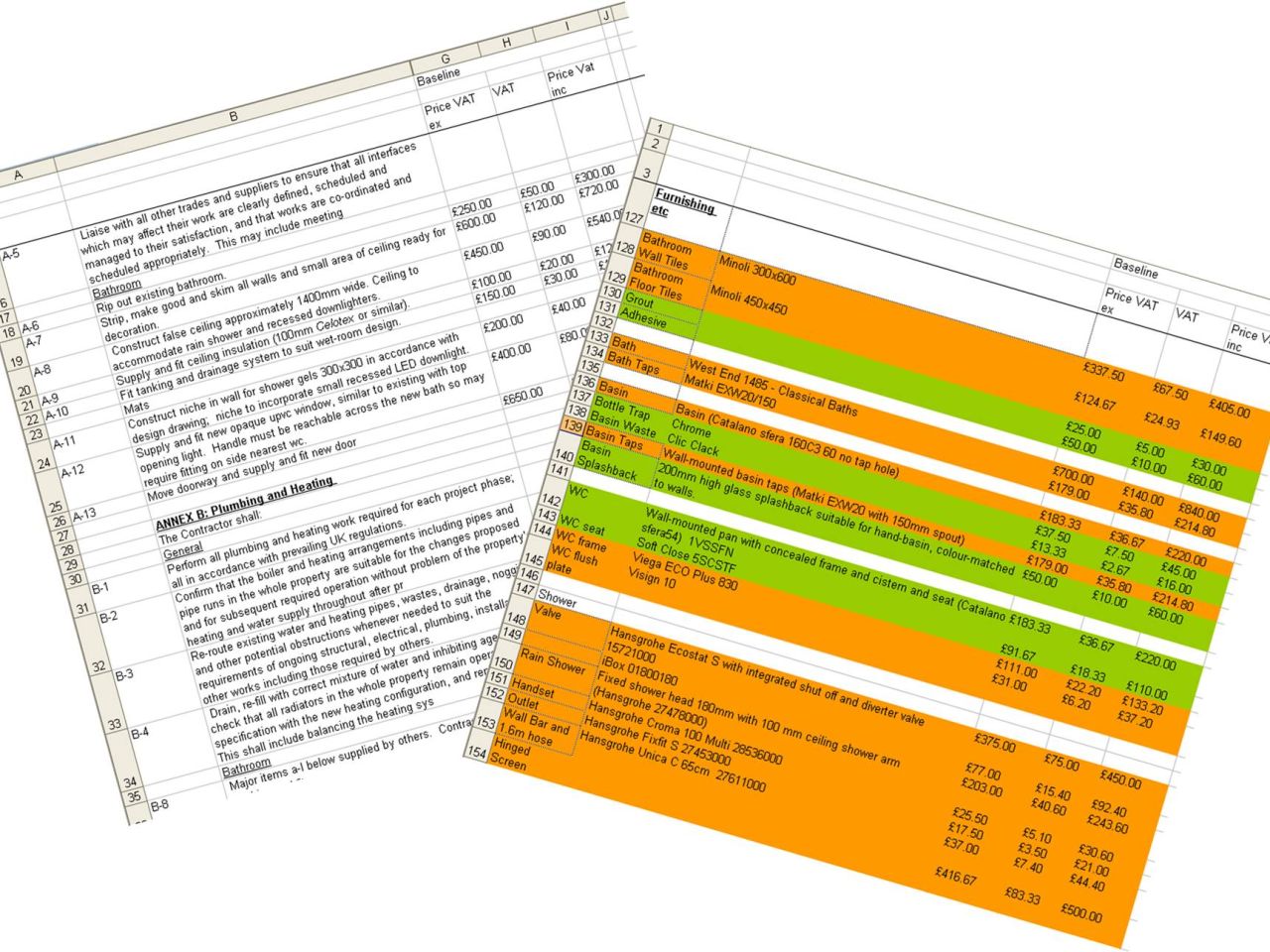
Pricing spreadsheet
Our pricing spreadsheets have 4 sections.
- price for contractor’s work (labour and materials)
- price for furnishings and fittings (those not supplied by the contractor, including any external labour, like hanging curtains)
- professional fees
- risk provision.
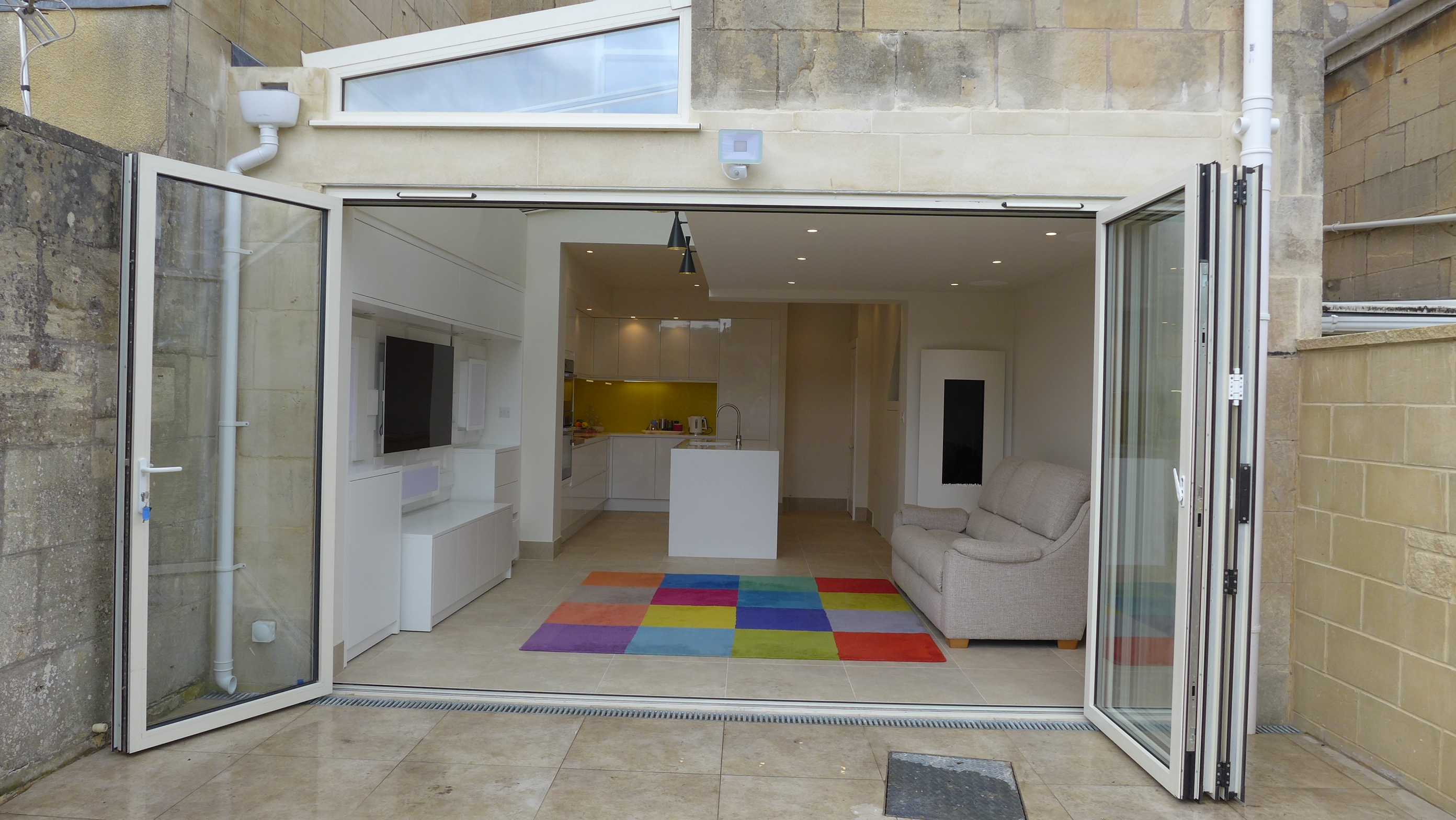
Looking at each in more detail:
- Price for contractor’s work: this covers the labour and materials supplied by the main contractor. Your specification should make clear which items the contractor is to “supply and fit” (eg trade radiators and light fittings) and which the contractor is to fit only (where items are supplied by you or others).
- Furnishings and fittings: this covers anything not supplied by the contractor. “Supplied by others” is accepted terminology made clear in your specification. It may include kitchen cabinets, bathroom suites, flooring, paint, and so on. You should also include here a price for any labour carried out by others (such as fitting a carpet).
- Professional Fees: Depending on the extent of the project, professional fees may include an interior designer, an architect, a structural engineer, a Party Wall surveyor, the water board, the council and others.
- Risk Provision: We identify specific risks with associated costs. We also include a 10% general provision (of the contractor’s price) for unforeseen risks (such as discovering rot when lifting floorboards).
These 4 sections should give you the total cost of your project and help manage the cost successfully. The spreadsheet will help you to manage your figures and to see where you might trade one price for another. You can also see more clearly if you need to phase the work to meet your cashflow.

Estimates and quotations
You may know that an “estimate” is just that – an estimate; it is not binding. Price increases can result if an estimate is re-evaluated upwards when the final bill is delivered. Always ask for a fixed price “quotation”.
For higher value projects, a competitive tender should help you to obtain better value for money. When choosing your contractor, make sure you are comparing like with like. The more detailed your specification, the more likely you are to obtain a true price comparison.
For more complex renovations, fix the prices that can be fixed. However, there may be other elements which are not yet fully defined. Here, it is reasonable for the contractor to include a “provisional sum” (PS) or “PC Sum” (PC), which are reasonable judgments on the eventual price of those elements when they arrive. PS and PC can lead to price increases so it is best to minimise these as far as possible before placing the contract. We explore this further below.
Minimising cost risk

The opposite of a taut specification is a loose specification. A loose specification adds risk and uncertainty when it comes to the cost of a home renovation.
A loose specification uses phrases like: the contractor is to “supply and fit lights” or “supply and fit taps” without stating the specific type and quantity of lights or taps. A contractor will almost certainly include a low PC sum for this to make the price appear more attractive. When you eventually choose your products, they will be higher than the PC sum. We spend significant time specifying all fixtures and fittings up front to minimise price uncertainty. All contractors can then tender against the same specific products. This detail will present a higher initial price, but it is one you can budget for with confidence.
Similarly, for provisional sums. If your contractor prices to lay foundations without establishing soil conditions, they may set a provisional sum for this. Once the work is complete, the contractor will charge the actual price. By digging pilot holes you can minimise this uncertainty before the contract is let.
As mentioned above, we include a section for risk provision (some call this “contingency”). We identify risks, and price these specifically in case they arise. Depending on the type, age and maintenance of the property, risks include presence of asbestos (eg in artex ceilings), woodworm, poor electrics and so on. We have found water pipes on the point of corroding through, rotten joist ends, and walls to repoint. These typically come to light once the contractor removes plaster and lifts floors. But the clients have actively budgeted for these additional tasks. Along with a general risk of 10% of the contractor’s costs, our clients have confidence in the upper bound of their budget.

House renovation contracts
You can write a contract for most simple house renovations yourself, using your written specification and a covering letter with agreed prices, signed up to by all parties. For more significant projects, particularly those involving structural work, you should use a standard document such as the JCT Minor Works contract. They are available to purchase on-line and cover everything you need – just fill in the gaps (name, price etc).
Cost control and payment

If you follow the steps above, there should be no surprises. You may face some variation from the original fixed price, whether through adjustment of PS and PC sums, or the realisation of risks – but you should at least be aware of them at the start. In our experience, clients often increase the scope of the project as they gain confidence in their contractors, and see good work. Obviously, you should still agree the price with the contractor for any additional work before committing to it and keep an eye on the overall budget. Hopefully, if the risks don’t materialise, you will have some extra funds available to spend on these further tasks.
You need to watch that additional scope doesn’t add a disproportionate cost. Contractors know that you have little choice once the job has started – the less scrupulous look for “extras” to make a good margin. So, when checking references, ask previous clients specifically whether the contractor priced additional work reasonably.

Paying the contractor
Your contract will state payment terms. There are several options.
- For a small project, you might agree to pay the contractor for materials, then pay the final amount on completion.
- For larger projects, you could specify key payment milestones (such as “groundworks signed off”).
- You could pay monthly based on percentage of work completed. “Percent complete” is a sensible measure of progress for a domestic project. Your spreadsheet can help here too – add more columns to represent each month ready to add the percent complete for each activity. For example if the price to install the kitchen was £3000 and you estimate 40% of this was complete in June, it is reasonable to pay £1200 for this at the end of June. You then total all the June figures for all your cost lines to give the payment for June.
Do not agree to pay monthly at a set amount each month – you must pay for results, not time or effort. Otherwise, you could find that you’ve paid 80% of the money but the contractor has only completed 20% of the work.
Finally, the contract should state the retention and retention period for resolving snags after completion. Reasonably, this might be a 5% retention paid 6 months from project end, provided there are no major snags outstanding.

Other home renovation guides
We hope the notes above will help you to control the cost of house renovation. Knowing the total cost, with a taut specification, a fixed price, and a sensible payment schedule, you shouldn’t go far wrong. You can read more about related topics elsewhere on our website by following the links below.
Property Renovation Guide. This advice column describes what to expect from a property renovation. It leads you through the steps to a successful renovation and covers planning, specification, tendering, choosing a contractor, contracts and overseeing the work.
How to Renovate a Property. An insight which includes a section on engaging professionals and the different skills they bring.
Cost of House Renovation. This page and subsequent links show actual costs from our renovations since 2004.
Best wishes for a successful and affordable project.
