
This blog talks specifically about bathroom heating, but we recommend that you consider this along with your broader bathroom renovation; you can read in our introduction to bathroom design, to set bathroom heating in context.
Multiple benefits of good bathroom heating
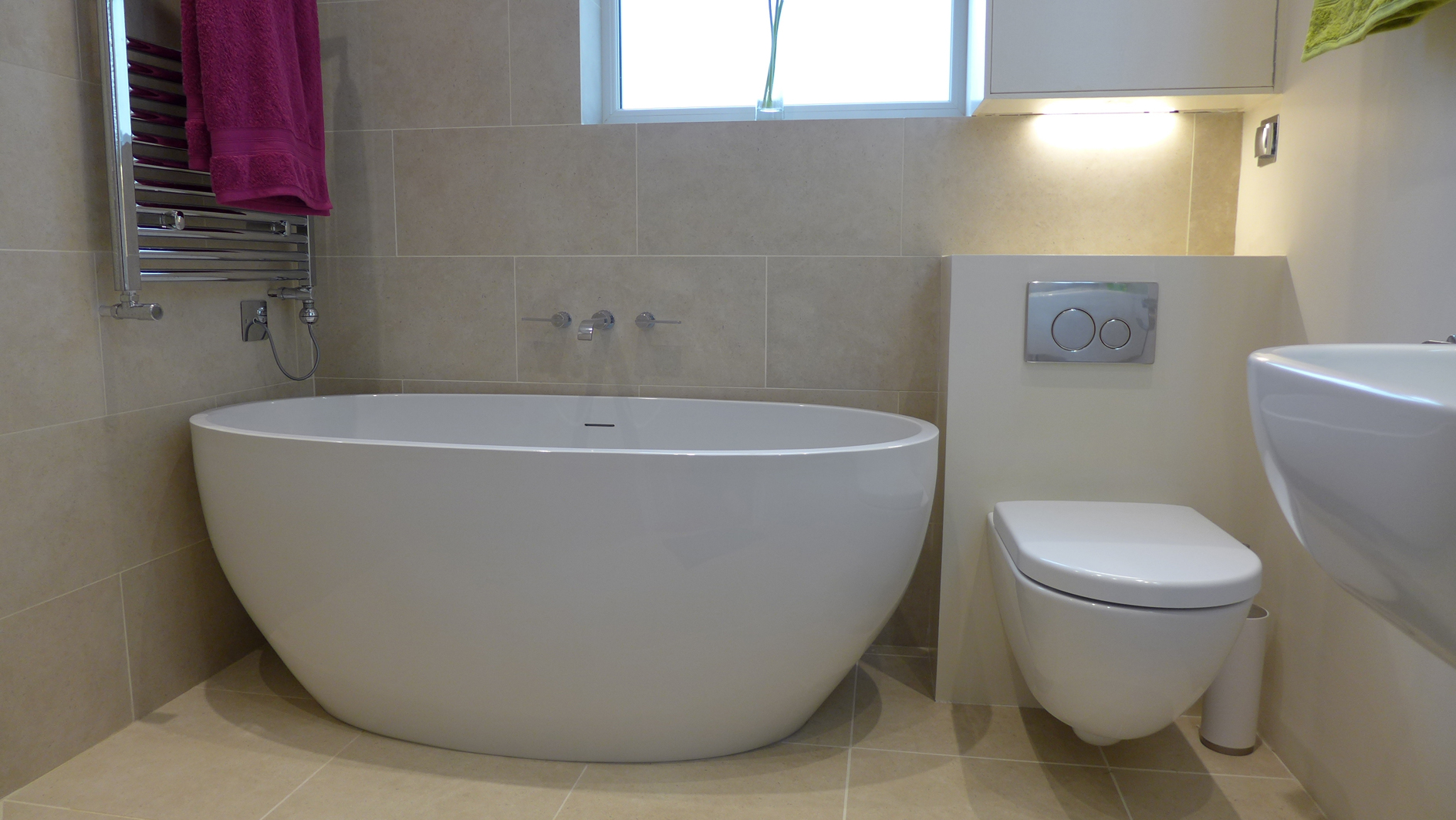
As well as creating a comfortable environment, effective bathroom heating serves several purposes.
- Warmth helps to speed up removal of condensation from mirrors and surfaces.
- When combined with an efficient extractor fan, adequate heating prevents mould from forming.
- Children’s morning routines are easier in warm, cosy bathrooms.
- The elderly, and those with health conditions, appreciate a regular bathroom temperature.
Here are a few things to consider:

Understanding heat loss in bathrooms
Heat loss dictates how much heat you need to generate in the space to keep warm. Many heating suppliers, such as Trade Radiators, provide heating calculators to help you work out what you should install in kilowatts, based on room size, window size, outside walls and so on. Fittings are rated on their website for you to match to the calculated value.
Bathrooms are particularly challenging because they contain a lot of hard surfaces; tiles, metals and glass all conduct heat away from the body.
High humidity levels created by your bath or shower temporarily raise the temperature. But when this dissipates, the space feels colder.
Modern bathroom heating is designed specifically to handle moisture, provide efficient heat distribution, and respond quickly to temperature demands.
The following describes the main options.
3 common bathroom heating solutions
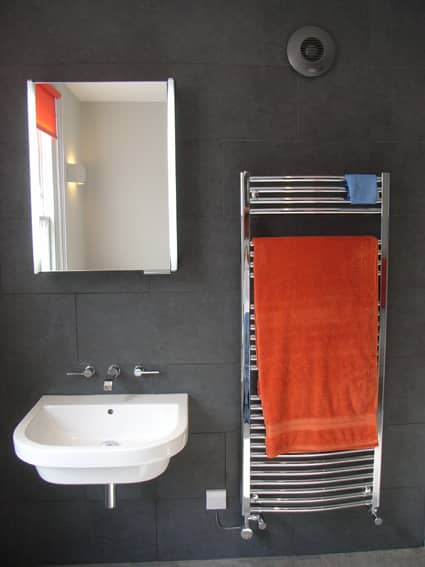

- Heated towel rails – serving dual purposes, they warm your bathroom whilst keeping towels dry and toasty.
- Radiators – offered in a variety of finishes, they provide enhanced corrosion resistance for bathroom humidity.
- Underfloor heating – the ultimate in luxury, distributing temperature evenly from the ground up.
To make the best choice for your specific bathroom, a professional interior designer will consider each option’s strengths and limitations. Let’s go through them.
Heated towel rails
Heated towel rails offer two benefits simultaneously
1. They keep your bathroom warm.
2. You always have dry, cosy towels waiting after your bath or shower.
Installation options
- Electric towel rails are usually wired-in directly. This may be the only practical option for homes without a gas supply.
- Wet-systems are connected to your central heating system, providing heat whilst the boiler is operating.
- Dual-fuel models combine an electrical heating element inside a water-filled rail, so you can have warm towels in the summer when your central heating is off.
Smaller bathrooms might find a heated towel rail sufficient for the space. Larger bathrooms may require more, described in the following sections.
Radiators
Standard radiators remain a common source of heating in bathrooms
Radiators are relatively easy to install – a great advantage for small renovations. Just make sure you’ve planned where to fit them before you start work.
Chrome and stainless steel options offer moisture resistance. Aluminium radiators are corrosion resistant.
As with a towel rail, an electric radiator may be the only option for a home without a gas supply.
The downside of a radiator is that it doesn’t distribute heat evenly across your bathroom, which is where underfloor heating come in.
The luxury upgrade
Underfloor heating
Underfloor heating transforms the floor into a gentle, consistent heat source
This solution operates at lower temperatures, improving overall efficiency and reducing your energy bills.
Installation will usually raise the floor height, potentially affecting door clearances and the threshold to other spaces – so take this into account when planning.
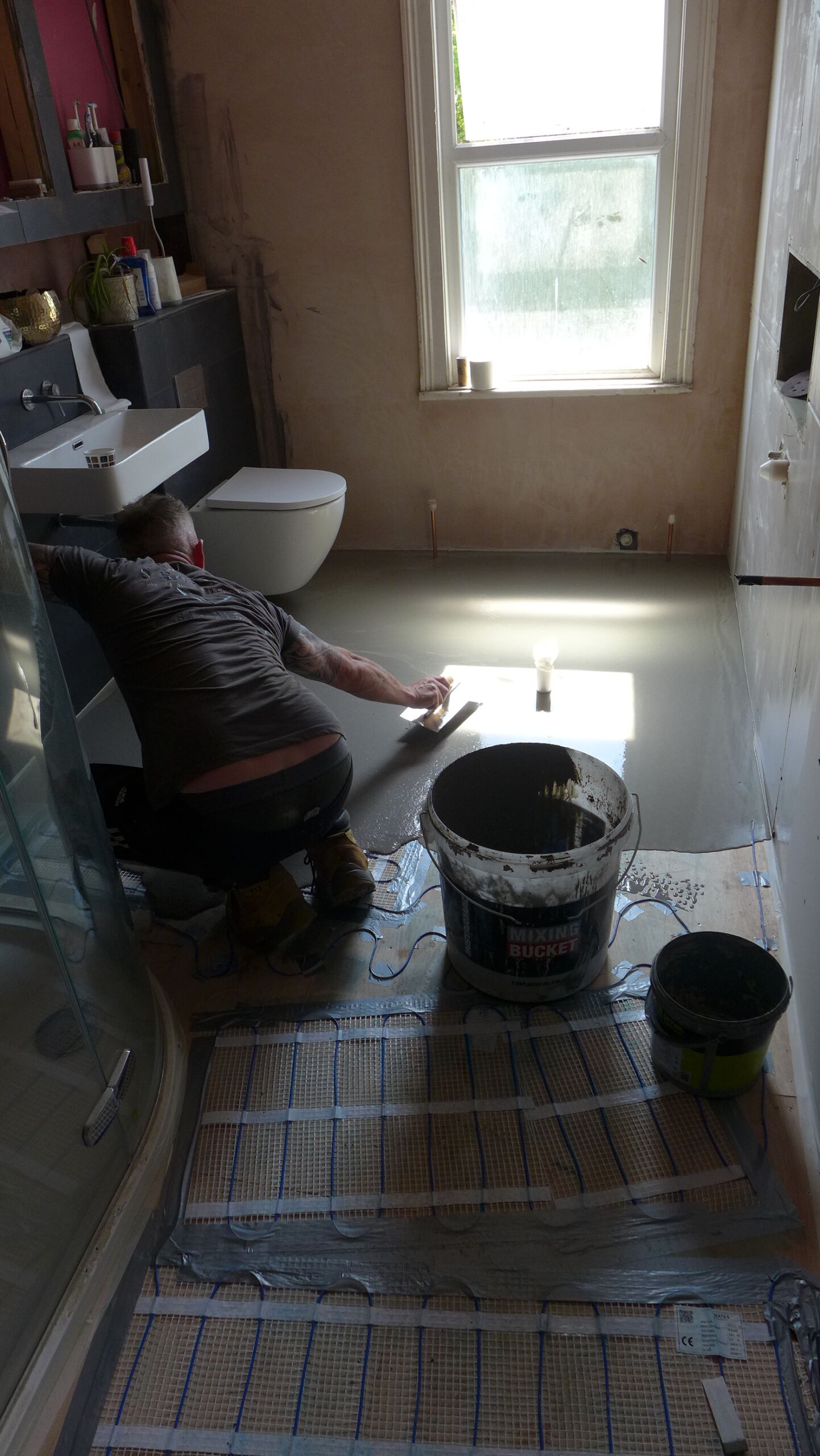
For a small space like a bathroom, when undergoing a retrofit, an electric heating mat or loose wire system may be more appropriate than a wet system for many reasons, not least of which is to minimise the rise in floor height. For example, retrofitting to a timber suspended floor on the first floor of a standard house, assuming the existing floor remains in place, you may need to install 3mm – 6mm ply first to provide a flat surface; the wired mat itself is typically 2mm – 3mm, then you may need to float 12mm of levelling compound. Then you need to add the thickness of the floor tile plus its adhesive – so, for example 3mm more for a vinyl tile.
But when complete, enjoy the luxury, warm feel underfoot.
Smart bathroom heating controls

Modern technology has revolutionised how we control bathroom heating
Programmable thermostats – allow you to schedule heating around your daily routine.
Smart home integration – connects bathroom heating to broader home automation systems. Smartphone apps allow remote control from anywhere.
Motion sensors – detect when someone enters a space and may trigger heating in the bathroom as you come home for the evening, for instance. But remember that spaces need time to heat up, so if you want your bathroom to be warm ready for your shower, make sure you initiate the heat source early enough.
Zone control – especially valuable in larger home
Transforming your bathroom

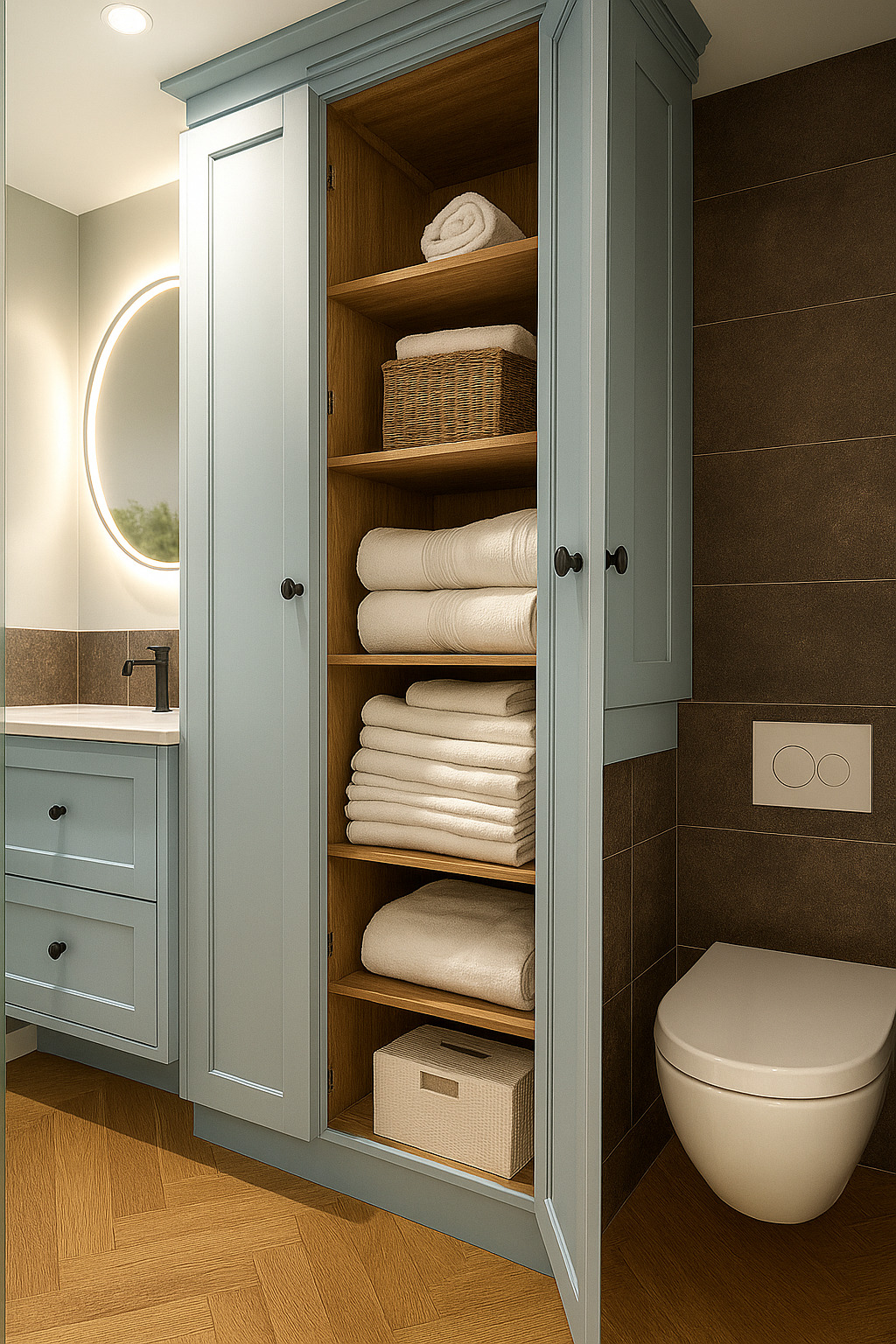
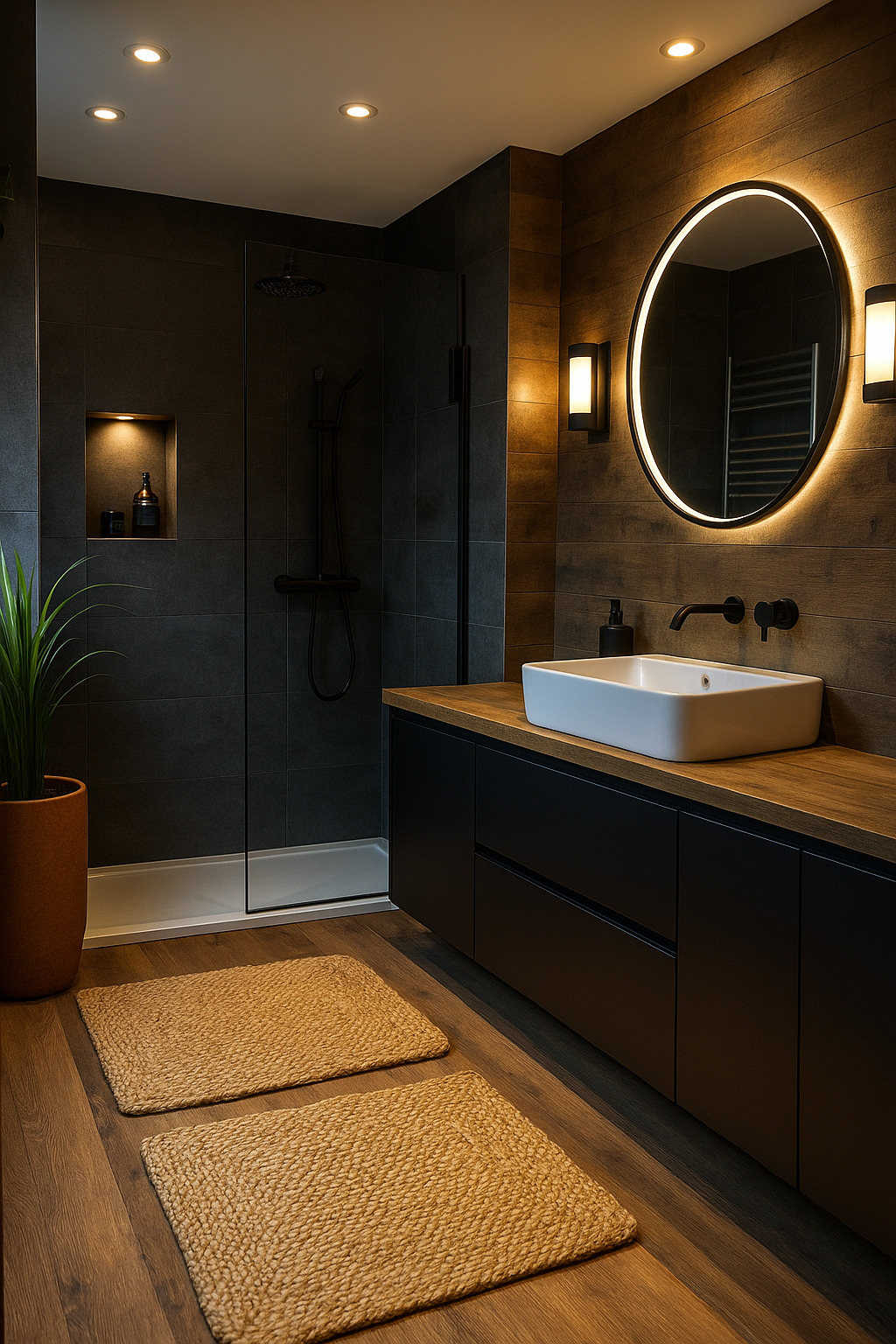

Understanding how heating systems work with your floorplan options, tile choices, and fixtures can mean the difference between a functional upgrade and a truly transformative renovation. At Style Within, we offer guidance tailored to your specific requirements, integrating seamlessly with your bathroom vision.
If you want to discuss ideas with us, please get in touch and we’ll help you choose the best heating options for your space, lifestyle, and budget.
